
Cerebras Systems’ Andrew Feldman on whether AI can keep scaling at TechCrunch Disrupt 2026
As artificial intelligence continues to evolve, the demand for computing power, energy, and infrastructure is reaching unprecedented levels. At TechCrunch Disrupt 2026, Andrew Feldman, CEO and co-founder of Cerebras Systems, will tackle the pressing question: "Can AI Keep Scaling?" Cerebras has spent the last decade challenging the notion that advanced AI applications must rely on traditional chip designs. Instead, the company has pioneered wafer-scale computing, offering both on-premise solutions and a cloud platform to meet the surging needs of AI processing. Feldman's session at Disrupt will delve into how Cerebras is innovating to address the limitations of current AI hardware and what the future may hold if these systems reach their maximum capacity. Feldman co-founded Cerebras in 2015, driven by a vision to revolutionize computing infrastructure. Before this venture, he played key roles in the startup SeaMicro, which focused on energy-efficient microservers and was acquired by AMD in 2012. Under his leadership, Cerebras has tackled the formidable challenge of bringing wafer-scale computing into practical use. Unlike conventional methods of creating chips, Cerebras manufactures processors directly from a silicon wafer, an architecture tailored for the intense demands of AI workloads. As the need for AI computing power escalates, Cerebras is expanding its capabilities. The company recently went public, raising $5.5 billion in May, and has entered a significant multiyear partnership with OpenAI to deploy 750 megawatts of Cerebras systems between 2026 and 2028. Their latest innovation, the CS-4, represents the cutting-edge of wafer-scale AI infrastructure, designed to meet the increasing demands of powerful AI applications. However, scaling AI effectively goes beyond just faster processors. It necessitates substantial data center infrastructure, energy resources, cooling systems, and manufacturing capacity. Cerebras is actively addressing these challenges, reporting over 600 megawatts of data center capacity either operational or under contract, with plans for a tenfold increase in manufacturing capabilities by 2026. Additionally, the company aims to launch its first European data center this year, targeting an operational capacity of 200 megawatts by the end of 2027. Feldman's insights will provide valuable context for founders, investors, and technology leaders navigating the complexities of AI infrastructure. His session promises to explore the trajectory of compute demand, the necessary support systems, and the potential limitations of current hardware. TechCrunch Disrupt is set to take place from October 13-15 at Moscone West in San Francisco, featuring over 200 sessions, networking opportunities, and insights from more than 250 speakers. This is an unmissable chance for anyone involved in AI to learn about the evolving landscape and what it takes to sustain its growth.
CERN and Mistral Join Forces to Revolutionize Particle Physics with AI
In a groundbreaking collaboration, CERN, Europe's leading scientific research organization, has partnered with Mistral, ...
Business Today | Oct 16, 2026, 20:40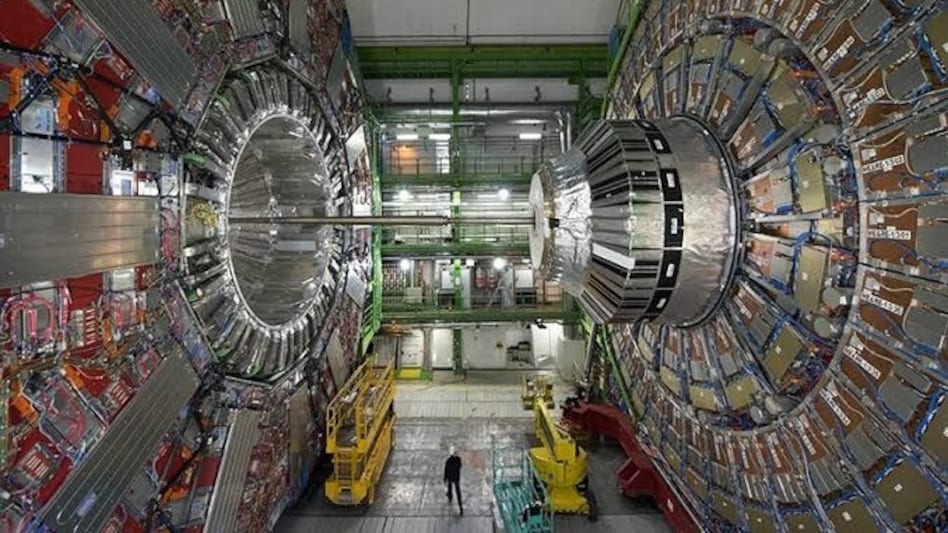
India's AI Investment Trail: The Race to Bridge the Funding Gap
India's aspirations in artificial intelligence (AI) are being challenged by a stark disparity in funding. Between 2013 a...
Business Today | Oct 16, 2026, 20:20
Waymo Takes Its Self-Driving Fleet to Canada: A New Era Begins
Waymo, the autonomous vehicle division of Alphabet, is set to make its foray into the Canadian market following its appr...
TechCrunch | Oct 16, 2026, 16:40
Porsche Macan Turbo EV: A New Era of High-Performance SUVs
The latest electric iteration of the Porsche Macan Turbo has sparked a wave of introspection regarding the essence of sp...
TechCrunch | Oct 16, 2026, 20:00
Anthropic Employees Envision a Future Dominated by AI: A Survey of Job Fears and Economic Predictions
A recent survey conducted by Anthropic reveals that its employees have a markedly different outlook on the impact of art...
Business Insider | Oct 16, 2026, 22:55