A new dating app made by college students uses mutual friends to match you. Read the pitch deck it raised $1.6M with.
Cerca, a novel dating app designed by college students, recently secured $1.6 million in seed funding to enhance its hiring and marketing strategies. This innovative platform aims to reshape the dating landscape by focusing on mutual friends, connecting users through their existing social circles rather than introducing them to strangers. Launched in March, Cerca offers a refreshing approach to online dating. Users can only view four profiles each day and discover at 8 p.m. whether someone has expressed interest in them. The app is built on the premise that Gen Z users prefer to form relationships with people they already know, leveraging their phone contacts to curate potential matches. Cerca's CEO, Myles Slayton, along with co-founders William Conzelman and Carter Rocket-Munk, developed the app during their senior year at Georgetown University. Slayton noted that the motivation behind Cerca stemmed from frustrations with existing dating platforms. The app allows users to see shared contacts with other profiles, enabling mutual friends to participate in the matchmaking process directly. To access the app, users must invite five friends or be granted immediate access if they already have that number of friends on the platform. This strategy creates a sense of community while ensuring that users engage with familiar faces. Sam Yagan of Corazon Capital, who has a notable background in the dating app industry, recognized Cerca's appeal among college students, particularly its rapid growth to over 20,000 users, primarily aged 18 to 30. Yagan pointed out a significant shift in preferences among Gen Z, who are increasingly moving away from traditional swipe-based apps. While the concept of using mutual connections for matchmaking isn't entirely new, Cerca distinguishes itself by allowing users to search for specific individuals, shortening the wait time for potential matches. Cerca plans to further its growth by organizing in-person events, such as parties and college campus activations, to bridge the online-offline divide that many dating interactions face. Yagan emphasized that integrating real-world experiences into the app's user engagement is crucial for its success. As Cerca continues to develop its platform, it positions itself as a "dating app for mutuals, not strangers," aiming to foster genuine connections in a safe environment. With an array of events already hosted in major cities, including New York City and Los Angeles, Cerca is paving the way for a new era of meaningful dating experiences.
South Korea's Deputy PM Advocates for Equitable AI Wealth Distribution Amid Samsung Strikes
In a pressing call for fairness, South Korea's Deputy Prime Minister Bae Kyung-hoon emphasized the necessity for the wea...
CNBC | May 23, 2026, 10:05
FCC Seeks Public Input on Whether ABC’s The View Qualifies as a News Show
The Federal Communications Commission (FCC) is intensifying its scrutiny of ABC’s talk show, The View, by launching a pu...
Ars Technica | May 22, 2026, 21:15
The AI Revolution: Transforming How We Search and Shop Online
Google is currently undergoing significant changes to its long-standing search engine to adapt to the evolving needs of ...
CNN | May 23, 2026, 09:05
India: The New Frontier for Salesforce's AI Ambitions
As businesses around the globe transition from AI trials to full-scale implementations, India is rapidly becoming a pivo...
Business Today | May 23, 2026, 05:30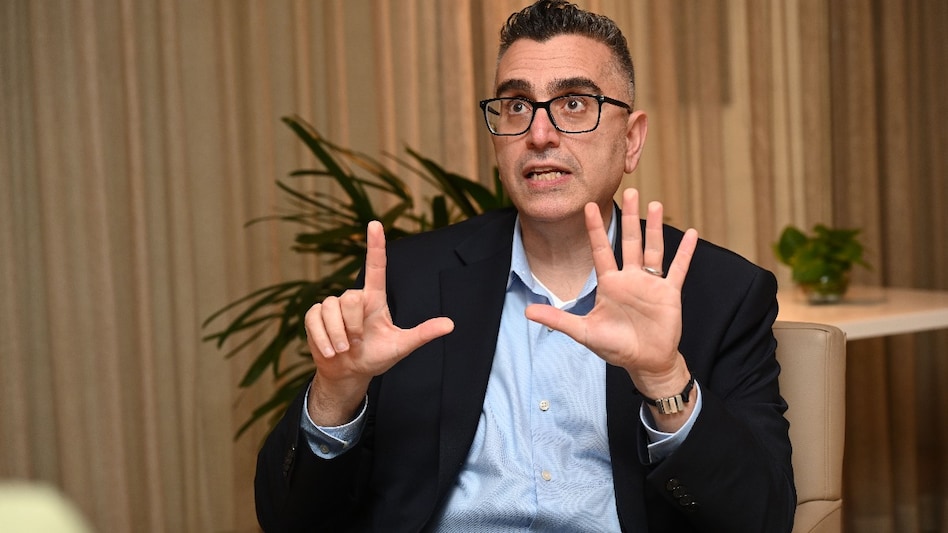
OpenAI Offers Up to $445,000 for Researcher to Tackle Self-Improving AI Challenges
OpenAI is taking significant steps to prepare for an era of self-improving artificial intelligence. The organization aim...
Business Insider | May 23, 2026, 09:15