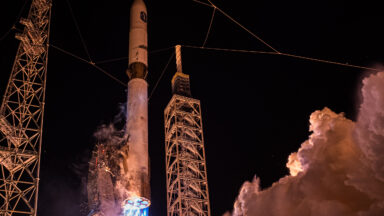
Blue Origin aims to land next New Glenn booster, then reuse it for Moon mission
Blue Origin's upcoming launch of the New Glenn rocket is poised to be a pivotal moment for the company and its future projects. This mission is not just about reaching space; it carries the weight of a NASA science initiative that aims to explore the upper atmosphere of Mars. The second flight of this heavy-lifter rocket will transport two NASA-funded satellites that will investigate the climatic evolution of the red planet, transitioning from a warm, wet environment to the cold, arid landscape we see today. Success in this launch is crucial for Blue Origin as it seeks certification from the Space Force, which would allow it to begin deploying national security satellites. However, the stakes are even higher. With plans to launch their first robotic lunar lander early next year, the recovery of the New Glenn rocket’s first stage booster is essential. To achieve this, teams will once again set up Blue Origin's landing platform in the Atlantic Ocean, replicating the approach used during the first flight in January. The inaugural launch of New Glenn successfully achieved orbit, a commendable accomplishment for a first-time rocket. Unfortunately, the booster did not manage a successful landing, plunging into the ocean after three engines failed to reignite in time. In response, engineers have identified seven adjustments aimed at enhancing performance, particularly in propellant management and engine bleed control. Pat Remias, Blue Origin's vice president of space systems development, expressed confidence in the upcoming mission, asserting, "We fully intend to recover the New Glenn first stage on this next launch." This flight, which will carry NASA's next set of Mars probes, is scheduled for no earlier than November from Cape Canaveral Space Force Station in Florida. The booster stage for this flight has been aptly named "Never Tell Me The Odds," reflecting the ambitious spirit of Blue Origin's leadership. While it may not be a gamble in the traditional sense, the outcome of this launch will significantly impact Jeff Bezos's lunar exploration program, underscoring the importance of a successful landing.
Uber Restructures Workforce Amid AI Integration, Laying Off 10% of Customer Support Staff
Uber has announced significant changes to its workforce, attributing the decision to advancements in artificial intellig...
Business Insider | Jul 23, 2026, 15:00Google Cloud Sees Surge in Customer Spending as Growth Soars
In a recent revelation, Thomas Kurian, the CEO of Google Cloud, announced that the company’s current customers are spend...
CNBC | Jul 23, 2026, 15:05
AI Startup Etched Surges to $10.3 Billion Valuation, Defying Doubters
Etched, an ambitious AI chip startup founded by three former Harvard students in 2022, has successfully secured $300 mil...
TechCrunch | Jul 23, 2026, 15:20
Google's Gemini AI Assistant Approaches Billion-User Milestone
Google is on the verge of adding another major product to its portfolio, which already boasts several offerings with ove...
TechCrunch | Jul 23, 2026, 15:21
Amazon Expands Prime Video with Exciting New Gaming Features
On Thursday, Amazon made a significant announcement, revealing its plan to incorporate games into Prime Video by merging...
TechCrunch | Jul 23, 2026, 15:25