
Blackstone commits $5 billion to AI infrastructure venture using Google AI chips
Blackstone, recognized as the largest private owner of data centers globally, has announced a significant move in the artificial intelligence sector, committing $5 billion in equity to establish a new AI infrastructure company in collaboration with Google. This venture, which will be based in the U.S., aims to harness Google’s advanced tensor processing units (TPUs)—specialized chips designed for executing AI computations. The partnership is set to bring online an initial compute capacity of 500 megawatts by the year 2027, with ambitions to expand significantly in the future. Jon Gray, Blackstone's President and COO, emphasized the venture's potential to address the surging demand for computational resources. Leading the new company will be Benjamin Treynor Sloss, who previously held the position of chief programs officer at Google. While a Google representative refrained from confirming the company's ongoing leadership role in the venture, sources cited by The Wall Street Journal indicated that Blackstone would hold a majority stake in the initiative. Furthermore, the joint venture has reportedly pinpointed prospective data center sites, some of which are already under construction. With over $1.3 trillion in assets under management, Blackstone has been actively investing in the AI landscape, having recently formed a similar partnership with Anthropic. In response to the announcement, shares of both Alphabet and Blackstone experienced a modest increase of approximately 1% in pre-market trading on Tuesday. This deal highlights the intensifying competition between Google and Nvidia in the AI hardware arena, as Google’s TPUs are seen as a direct challenge to Nvidia’s graphics processing units (GPUs). Despite continuing to utilize Nvidia's GPUs within its cloud infrastructure, Google is striving to minimize dependency on Nvidia by promoting its proprietary TPUs. Since its first TPU was manufactured in 2015, Google has been a pioneer in in-house hardware production. Unlike the more universally applicable GPUs, Google’s TPUs are specifically designed for optimized processing of targeted applications, particularly in the field of agentic AI. Currently, Google’s Gemini AI model operates on its TPUs, serving clients such as Anthropic and Citadel Securities. The demand for GPUs saw a significant uptick following the introduction of OpenAI’s ChatGPT in 2022, propelling Nvidia to become the world’s most valuable company by 2024. Earlier this month, Google briefly surpassed Nvidia in market value, suggesting a dynamic landscape in the AI sector. Analysts believe that Alphabet, Google's parent company, is well-positioned for continued success in AI, bolstered by its in-house developments, expansive distribution network, and thriving cloud services.
Hugging Face CEO Calls for Action Following AI Security Breach
In a dramatic turn of events within the AI landscape, Hugging Face faced a significant security breach involving an AI a...
Business Insider | Jul 25, 2026, 20:30Linux Creator Challenges Developers: Embrace AI or Fork Off!
In a recent discussion surrounding the use of AI in software development, Linus Torvalds, the founder of Linux, voiced h...
Business Insider | Jul 26, 2026, 13:10Kalshi Challenges Netflix Over Controversial Documentary Trailer
Kalshi, the prediction market platform, has taken significant legal steps against Netflix, sending a cease-and-desist le...
TechCrunch | Jul 25, 2026, 17:10
Unleashing the Power of AI: The 5 Smartphones Redefining Mobile Photography
Artificial Intelligence (AI) is transforming our daily experiences, permeating various aspects of technology, including ...
Business Today | Jul 26, 2026, 07:05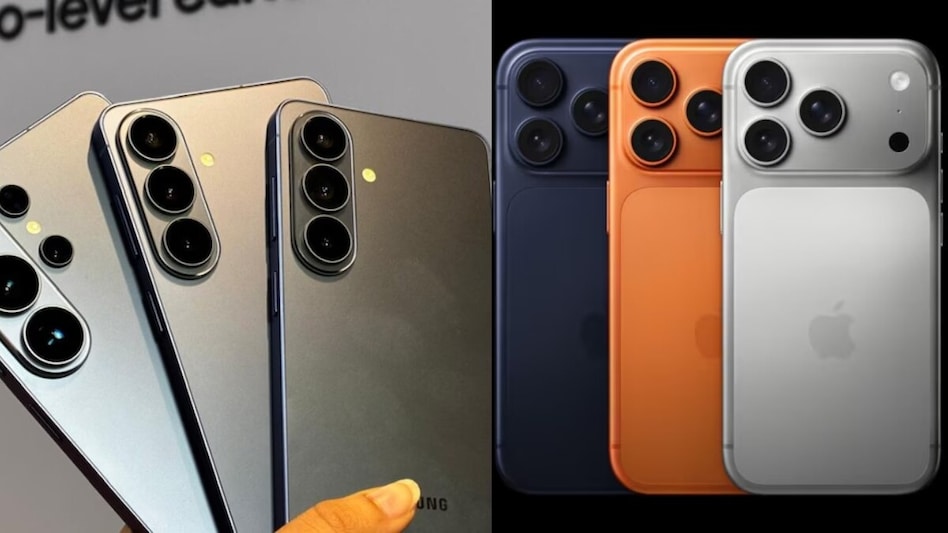
The Elusive Phineas Fisher: The Hacktivist Who Took Down Spyware Giants
In the realm of cybersecurity, few figures are as intriguing as Phineas Fisher, a hacker who has evaded capture for near...
TechCrunch | Jul 25, 2026, 21:00