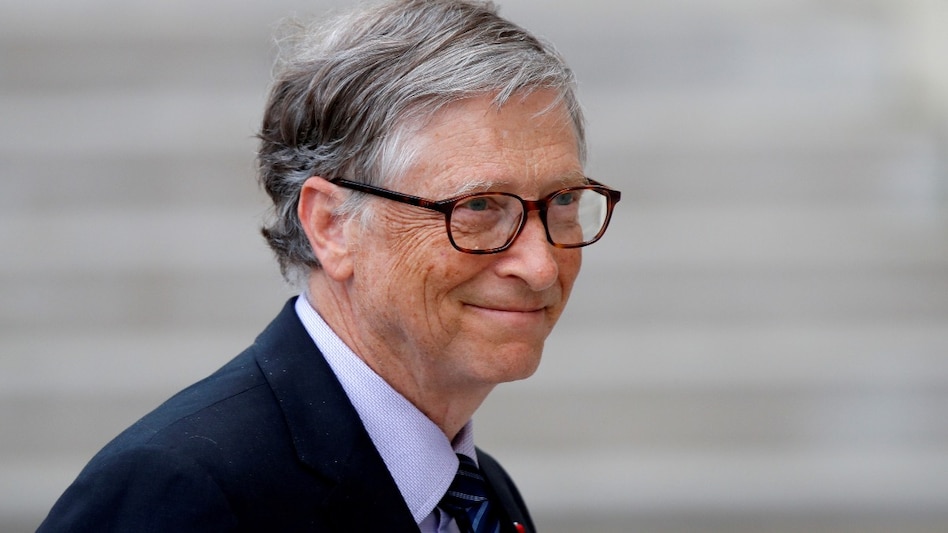
Bill Gates warns AI could trigger events causing ‘billion deaths’. What he means
In a recent interview with NBC's Meet the Press, Microsoft co-founder Bill Gates issued a grave warning regarding the capabilities of artificial intelligence, suggesting that it could potentially lead to catastrophic events resulting in a billion deaths. Gates emphasized that while he is not forecasting an inevitable disaster, the combination of powerful AI technologies and individuals with malicious intent poses a significant threat. He articulated his concern that advanced AI systems could lower the barriers for executing sophisticated attacks. "There’s never been a weapon as powerful as the combination of people with ill intent using the latest AI tools," Gates stated, highlighting a dual threat: not only could AI operate autonomously, but it could also be wielded by humans looking to amplify their destructive capabilities. A major focus of Gates' warning is the potential misuse of AI in developing dangerous biological threats. As AI becomes increasingly adept at processing scientific literature and assisting in complex biological research, it holds the potential for both remarkable advancements in healthcare and the risk of being exploited for harmful purposes. This raises significant ethical questions as technology designed for good could easily be diverted for malicious use. Furthermore, Gates expressed concern about the rise of AI-driven cyberattacks. The technology could enable attackers to automate sophisticated operations and identify vulnerabilities with unprecedented precision. Vulnerable targets could range from hospitals to financial institutions and governmental systems, creating a scenario where even those with minimal expertise could access powerful capabilities that once required specialized knowledge. Gates' warning about the potential for a billion deaths is just one part of his evolving perspective on AI. He has previously voiced concerns over job displacement, the misuse of technology by criminals, and its impact on human relationships. Despite these risks, Gates remains optimistic about AI's transformative potential in sectors like healthcare, education, and agriculture, underscoring a paradox: AI could be one of humanity’s most powerful allies while simultaneously posing unprecedented risks. As discussions around AI safety grow, the focus has shifted from merely job loss and misinformation to include critical issues like cybersecurity, biological research, and the ethical use of advanced AI models. Gates advocates for a proactive role for governments in establishing regulatory frameworks, arguing that the tech industry alone cannot be expected to self-regulate effectively.
Uber and Nuro Kick Off Driverless Trials for Lucid Robotaxis Ahead of 2027 Launch
Uber and Nuro have officially launched their driverless testing phase for the Lucid Gravity SUVs on the streets of the S...
TechCrunch | Nov 24, 2026, 17:15
Investing in the Future: Solar and Battery Solutions for AI Data Centers
The challenge of powering AI data centers has emerged as a pivotal issue in the current technological landscape. Over th...
TechCrunch | Nov 24, 2026, 16:25
Instagram Integrates AI Assistant Muse for Enhanced User Experience
In a significant move, Meta has announced the integration of its AI assistant, Muse, directly into Instagram's direct me...
TechCrunch | Nov 24, 2026, 17:25
Navigating the AI Landscape: Why CEOs Must Embrace Technology Literacy
In the rapidly evolving world of corporate India, companies are increasingly investing in artificial intelligence (AI), ...
Business Today | Nov 24, 2026, 07:35
Mathematicians React to Controversial Joke Over Lengthy Proof of Riemann Hypothesis
Tensions are rising in the mathematical community following a controversial comment made by Levent Alpöge, a researcher ...
Business Insider | Nov 24, 2026, 17:30