Using free hotel WiFi? Your data could be at risk, Microsoft warns
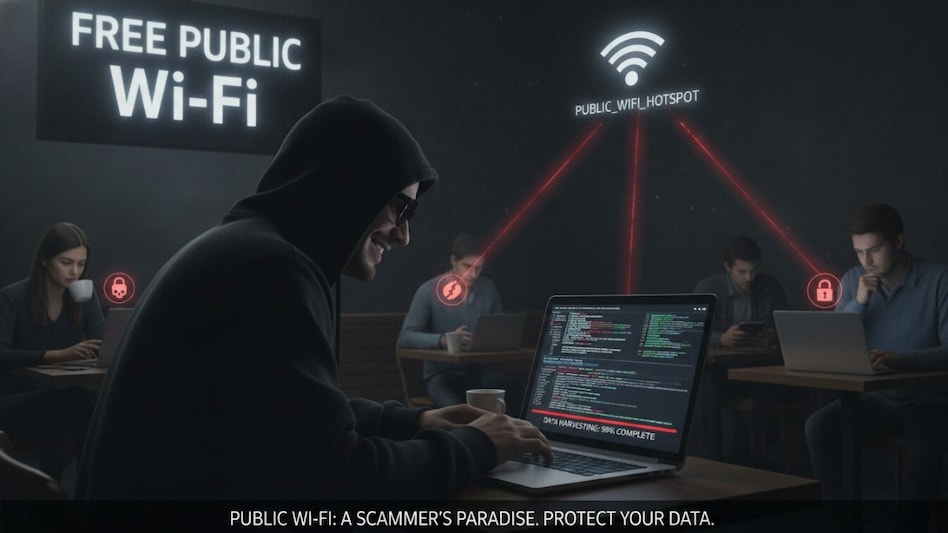
Traveling often comes with the convenience of free hotel Wi-Fi, but a new warning from Microsoft should make you think twice before connecting. The tech giant's Threat Intelligence team has uncovered a cyberattack campaign that specifically targets hotel and guest Wi-Fi networks, raising significant concerns about data safety. Named CaptiveCrunch, this troubling campaign has been active since early May 2026 and is attributed to Storm-2945, a subgroup of the notorious Russian hacking organization known as Midnight Blizzard, or APT29. This group has shown a marked interest in infiltrating the networks of hotels worldwide, with a particular focus on business travelers and their corporate accounts. The method of attack centers around captive portals—those login or verification pages that users encounter when they first connect to hotel Wi-Fi. Microsoft reports that Storm-2945 is adept at manipulating DNS and HTTP traffic from these networks, luring users to malicious websites. Once there, victims may face deceptive prompts that appear to be legitimate Windows, browser, or security notifications, urging them to install software updates or complete verification processes. Android users are also at risk, as they may be tricked into downloading harmful APK files. In addition to these tactics, Microsoft has pointed out that the campaign includes device-code phishing, which can mislead users into authorizing access to attacker-controlled sessions, potentially granting hackers entry into corporate accounts. Among the various malicious software identified in this campaign are CornFlake and ChocoShell. CornFlake, a Windows remote-access trojan, is capable of stealing files and credentials, logging keystrokes, capturing screenshots, and even conducting audio and video surveillance. ChocoShell primarily targets browser session cookies, saved passwords, Microsoft 365 single sign-on tokens, and Wi-Fi credentials. In light of these threats, Microsoft strongly advises travelers to treat public Wi-Fi networks, such as those in hotels and airports, as untrusted environments. Whenever possible, opt for a mobile hotspot or eSIM for secure connections. Additionally, avoid downloading software or security tools prompted by Wi-Fi login pages and ensure that updates are performed through official channels to safeguard your devices.
Maple Secures $5.3 Million to Revolutionize Data Privacy in AI
As artificial intelligence becomes increasingly capable of accessing sensitive information such as files, emails, and ca...
TechCrunch | Nov 24, 2026, 21:30
Jensen Huang Shares Personal Journey in First All-Hands Meeting Post-Reinstatement
In a pivotal moment for Nvidia, CEO Jensen Huang addressed employees on Tuesday during his first companywide meeting sin...
Business Insider | Nov 24, 2026, 19:55Electric Truck Innovator Harbinger Secures Major Funding from Erebor Bank
Harbinger, an emerging player in the electric truck industry, has secured a significant financial boost from Erebor Bank...
TechCrunch | Nov 24, 2026, 18:00
Mathematicians React to Controversial Joke Over Lengthy Proof of Riemann Hypothesis
Tensions are rising in the mathematical community following a controversial comment made by Levent Alpöge, a researcher ...
Business Insider | Nov 24, 2026, 17:30UK Government Sounds Alarm on Surge of AI-Enhanced Cyber Threats
The United Kingdom's cybersecurity agency has reported a significant increase in cyberattacks driven by artificial intel...
TechCrunch | Nov 24, 2026, 18:30