Baidu is emerging as a major AI chip player in China to fill the Nvidia gap
Baidu, the prominent Chinese tech company best known for its search engine, is rapidly establishing itself as a key player in the artificial intelligence chip sector. As industry leader Nvidia remains barred from the Chinese market, Baidu is positioning itself to fill the gap alongside competitors like Huawei. In recent years, Baidu has shifted its focus towards autonomous vehicles and AI technologies, bolstered by its majority-owned subsidiary, Kunlunxin, which specializes in chip design. Analysts have recently revised their forecasts for Baidu's stock, highlighting its semiconductor business's potential for increased domestic orders. This month, Baidu unveiled an ambitious five-year plan for its Kunlun AI chips, with the first models, the M100 and M300, set to launch in 2026 and 2027 respectively. Currently, Baidu is utilizing its proprietary chips in its data centers to support its ERNIE AI models, alongside Nvidia's offerings. The company generates revenue not only by selling chips to third-party data center developers but also by providing cloud computing services. Baidu aims to present itself as a comprehensive AI solution provider, integrating chips, servers, data centers, and AI applications. The chip division appears to be gaining momentum, having recently secured orders from major suppliers like China Mobile, one of the nation's leading telecom carriers. Analysts from Deutsche Bank noted that Kunlunxin has established itself as a prominent domestic AI chip developer, concentrating on high-performance chips suitable for large language model training, cloud computing, and enterprise workloads. With Nvidia's advanced graphics processing units (GPUs) off-limits due to U.S. government restrictions, Baidu's growth prospects in the chip sector seem promising. JPMorgan analysts indicate that domestic demand for AI computing in China is surging, with a shift towards local suppliers. They predict that Baidu's chip sales could skyrocket to 8 billion yuan (approximately $1.1 billion) by 2026, with Macquarie estimating the valuation of Baidu's Kunlun unit at around $28 billion. Baidu is not alone in this endeavor, as other Chinese tech giants are also investing in their own semiconductor developments. Recently, Alibaba revealed plans for its next-generation AI chip, while Tencent acknowledged challenges related to supply shortages impacting their capital expenditures. The ongoing global semiconductor shortage, exacerbated by the U.S. blockade of Nvidia products in China, has prompted local firms to optimize their AI models to maximize efficiency with the available chips. However, China's leading chipmaker, SMIC, faces difficulties competing with established global manufacturers, complicating domestic chip production. Despite these hurdles, demand for AI technology remains robust in China. Industry leaders like Alibaba have reported an inability to keep up with the increasing customer demand for AI solutions. As Baidu navigates this landscape, its chip initiative represents both a critical need and a significant opportunity within the burgeoning domestic AI hardware market, compliant with both U.S. export regulations and China's self-reliance goals.
Tech Giants Face Market Turmoil Amid Rising AI Investment Costs
As Alphabet and Tesla kicked off the tech earnings season on Wednesday, a clear trend emerged: the intense scrutiny on A...
CNBC | Jul 23, 2026, 01:55
Amazon Optimizes Alexa's AI Costs by Shifting from Anthropic Models
In a strategic move to cut expenses, Amazon has restructured the way its AI-powered voice assistant, Alexa, operates, re...
Business Insider | Jul 23, 2026, 09:05Amazon's AGI Team Faces Job Cuts Amid Ongoing Restructuring
In July, Amazon has initiated further job cuts within its artificial general intelligence (AGI) division as part of its ...
Business Today | Jul 23, 2026, 06:15
Silicon Valley's Startup Leaders Rally Against Potential Ban on Chinese AI Models
Nearly 200 companies from Silicon Valley, including prominent names like Proton and Y Combinator, are appealing to the T...
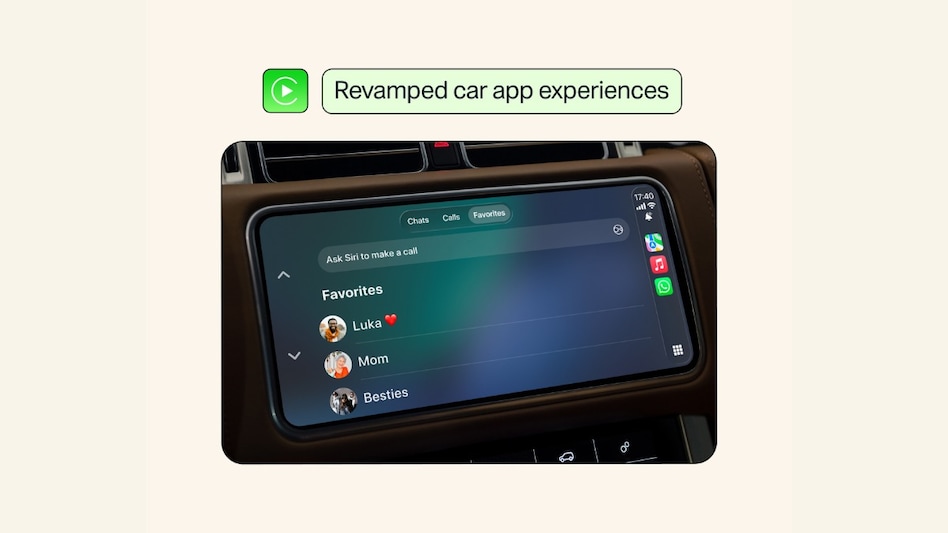
Business Insider | Jul 22, 2026, 23:25WhatsApp Unveils Major Updates for iPad and CarPlay Integration
WhatsApp is introducing a series of significant upgrades across its platforms, particularly focusing on iPad, CarPlay, a...
Business Today | Jul 23, 2026, 08:10