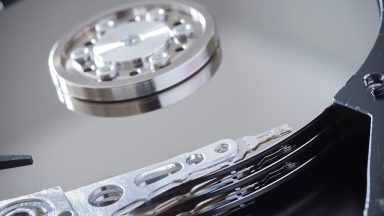
Backblaze, owner of 317,230 HDDs, says HDDs are “lasting longer”
Backblaze, a prominent cloud storage and backup service, has been meticulously monitoring the annualized failure rates (AFRs) of its hard drives since 2013. This extensive tracking has yielded a wealth of data, leading the company to assert that hard disk drives (HDDs) are exhibiting increased longevity and fewer errors than in previous years. In a recent blog post authored by Stephanie Doyle, a writer and blog operations specialist at Backblaze, alongside Pat Patterson, the company’s chief technical evangelist, the two experts unveiled their findings. They analyzed the failure rates of approximately 317,230 hard drives within Backblaze's data center and compared these with the AFRs recorded from smaller samples of 21,195 drives in 2013 and 206,928 in 2021. Doyle and Patterson noted a significant shift in both the age at which drives fail and the peak failure rates observed in their earlier analyses. The current high failure percentage peaked at 4.25% at around 10 years and 3 months of age, a stark contrast to the 13.73% peak observed at approximately 3 years and 3 months in 2013, and 14.24% at 7 years and 9 months in 2021. This notable enhancement in drive durability marks a pivotal moment, as it is the first instance where the peak failure rate has occurred at a much older age, and it represents about one-third of the previous failure peaks. For further insights into the specifics of the drives examined this year, readers can refer to the detailed blog post by Doyle and Patterson. The analyzed drives, sourced from manufacturers such as HGST, Seagate, Toshiba, and WDC, had an average age ranging from 3.7 months to 103.9 months (approximately 8.7 years) and varied in capacity from 4TB to 24TB. In contrast, the 2021 analysis included drives from the same manufacturers, which had an average age between 3.57 to 80.85 months (around 6.7 years) and capacities from 4TB to 16TB. As has been the practice in prior evaluations, Doyle and Patterson also related their findings to the bathtub curve—a well-known engineering model that illustrates how failure rates typically follow a U-shaped trajectory over time. This model indicates that failures are more common in the early stages of a component's life, before stabilizing and then increasing as the component ages.
Nous Research Seeks New Funding to Boost Hermes Agent at $1.5 Billion Valuation
Nous Research, the innovative startup known for the open-source Hermes agent, is reportedly in the final stages of secur...
TechCrunch | Jul 13, 2026, 23:55
Navigating the Ethical Maze of AI: A Controversial Perspective
A provocative question arises: Should AI be developed to assist individuals in harmful actions, such as plotting a crime...
TechCrunch | Jul 13, 2026, 16:45
Meta's Louisiana Data Center Expansion Promises Economic Boost for Local Educators
Meta is significantly expanding its Louisiana data center, known as Hyperion, which is set to become the largest AI faci...
Business Insider | Jul 13, 2026, 18:10Apple's Lawsuit Unveils Shocking Claims Against OpenAI Over Trade Secrets
Apple's recent lawsuit against OpenAI has revealed a series of serious allegations concerning the unauthorized extractio...
TechCrunch | Jul 13, 2026, 18:45
X Enhances Algorithm to Foster Friendlier Interactions Among Users
In a recent announcement, X has modified its algorithm to enhance the visibility of posts among users and their mutual f...
TechCrunch | Jul 14, 2026, 24:05