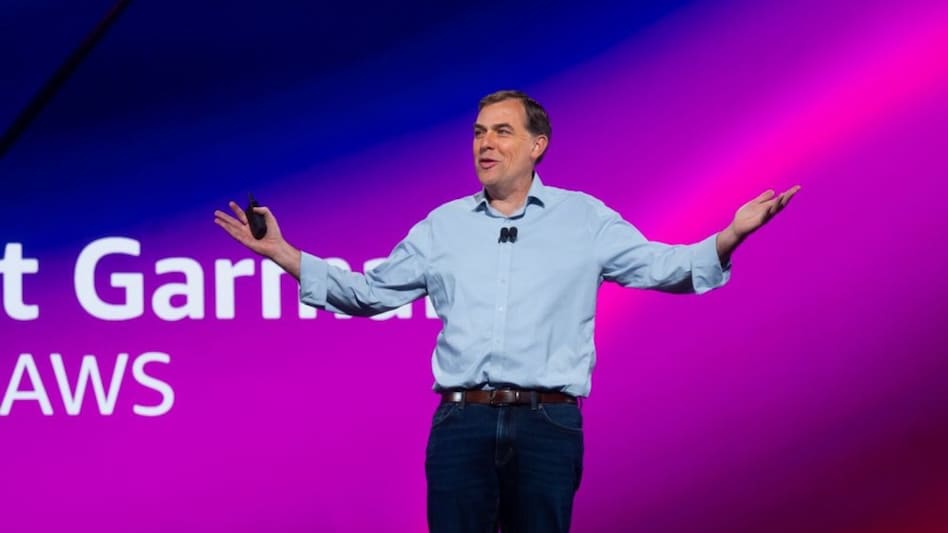
AWS CEO Matt Garman: Space data centres 'pretty far' from reality
Matt Garman, the CEO of Amazon Web Services (AWS), recently shared a sobering perspective on the future of space-based data centers, declaring that the concept is still 'pretty far' from being a feasible reality. During his address at the Cisco AI Summit in San Francisco, Garman highlighted a stark contrast between AWS's cautious approach and the more optimistic views held by some competitors in the tech and aerospace sectors. When questioned about the possibility of establishing data centers in orbit, Garman pointed out the current limitations, stating, "There are not enough rockets to launch a million satellites yet, so we're, like, pretty far from that." He emphasized the massive costs associated with sending payloads into space, which he described as economically unviable at this time. The idea of utilizing space for data storage has gained popularity, with proponents arguing that it could alleviate land use and cooling challenges faced on Earth. Additionally, some believe that space-based facilities might offer a more efficient solution for the substantial computational power needed for advancements in artificial intelligence. This notion has been further fueled by Elon Musk's recent announcement regarding a merger between SpaceX and xAI, creating a company valued at $1.25 trillion. However, Garman's remarks serve as a reminder of the significant economic and technical obstacles that must be overcome. He noted that while the notion is fascinating, the reality of operating high-performance technology in the harsh conditions of space, alongside the exorbitant costs of launching and maintaining such systems, renders it an impractical option in the near future. Interestingly, this skepticism from AWS’s CEO comes in light of Amazon founder Jeff Bezos's substantial investments in the space industry through Blue Origin. Nonetheless, it appears that AWS will continue to prioritize the growth of its data centers on Earth, a focus that is currently challenged by power-grid delays in Europe that could hinder expansion plans. Meanwhile, Google is also making strides in this domain with its 'Suncatcher' orbital data center project, which may see test launches as early as next year.
Meet the 12-Year-Old Innovator Revolutionizing Small Business Communication with AI
In the realm of young entrepreneurship, Mana Jampala stands out as a remarkable innovator. At just 12 years old and base...
Business Insider | Jul 08, 2026, 09:35Amazon's Ambitious Moonraker Project: A Deep Dive into their Costly Alexa AI Upgrade
Amazon is embarking on an ambitious new project known as 'Moonraker,' aimed at enhancing the capabilities of its Alexa A...
Business Insider | Jul 08, 2026, 09:20Navigating the New Landscape of Software Engineering in the Age of AI
The software engineering field is undergoing a significant transformation, driven largely by the rise of artificial inte...
Business Insider | Jul 08, 2026, 09:50The Dark Side of AI Distillation: A Threat to Industry Profits
Recent developments in AI distillation are raising alarms across the tech sector, as the practice begins to undermine th...
Business Insider | Jul 08, 2026, 09:20OpenAI Set to Launch GPT-5.6 Models for All Users After Government Restrictions Lifted
OpenAI is preparing to unveil its highly anticipated GPT-5.6 models, including Sol, Terra, and Luna, on Thursday. This a...
CNBC | Jul 08, 2026, 12:55