Cheaper, faster, and culturally aware, Avataar’s video AI is built for India’s scale
India has lagged behind the U.S., Europe, and China in the development of AI models, with only a handful of startups venturing into this space. To stimulate growth, the Indian government initiated the India AI Mission, a substantial investment of approximately $1.2 billion aimed at facilitating the development of AI technologies. This initiative provides selected startups access to subsidized GPU computing resources in exchange for making their models publicly available. Among the 12 startups chosen for this initiative is Avataar AI, which has introduced a groundbreaking video AI model called Varya. Designed to comprehend local contexts, Varya can identify various cultural elements such as festivals, local cuisine, and traditional attire. Instead of starting from scratch, Avataar AI leveraged the Wan 2.2 model, initially released by Alibaba, employing a process known as distillation. This approach allowed them to create a streamlined version of the model that is both faster and more efficient for their intended applications. The outcome is striking: Varya operates in just four steps, a significant reduction compared to the 50 steps required by Wan 2.2, enabling video production that is ten times quicker and significantly more cost-effective. For instance, using an NVIDIA H200 GPU, Varya can generate a 5-second 720p video clip in a mere 45 seconds, as opposed to the 1,230 seconds that Wan 2.2 requires. Perhaps the most compelling aspect of Varya is its affordability. Avataar AI plans to charge ₹0.48 ($0.005) per second for video on its hosted service, which is dramatically lower than competitors like Veo, Kling, Luma, and Runway, who typically charge at least $0.10 per second. This price difference of approximately 20 times is significant for a country where video content is becoming increasingly essential. Rajan Anandan, managing director of Peak XV, emphasized the importance of affordability in the widespread adoption of AI video tools in India. He stated, "India is a video-first market. Every major consumer internet product in India shows that video outperforms text. Current AI video solutions are prohibitively expensive for large-scale use in India. For AI video to reach students, teachers, MSMEs, content creators, enterprises, and public services, costs must dramatically decrease." Another noteworthy feature of Varya is its sensitivity to cultural nuances, an area where many image and video generation models fail. Avataar AI claims to have trained Varya with carefully curated data to ensure it accurately represents India's diverse culture, including its food, clothing, architecture, and festivals. Varya will be available as an open-weight model on India’s AI Kosh portal, the government’s centralized repository for publicly accessible AI models, allowing developers to modify or self-host the model as needed. Additionally, Avataar AI intends to provide the model to enterprise clients and welcomes partnerships with video tool providers like Higgsfield and Adobe Firefly. Users can currently explore Varya on the Avataar website, utilizing text prompts or reference images to generate video content. Varya's launch highlights a crucial aspect of India's AI strategy. Industry experts have noted that India can make a significant impact in AI by focusing on application development and cultivating a robust ecosystem for developers, rather than attempting to compete in foundational model development. This pragmatic approach stems from the challenges of limited compute resources and quality data availability that have hindered the pace of model development in India compared to global competitors. The India AI Mission is part of a broader government effort to bridge this gap, with plans to attract $200 billion in AI investment by 2028 and to double GPU capacity within six months.
Unveiling the Pioneer of AI: The Legacy of John McCarthy
The origins of artificial intelligence (AI) can be traced back to the 1920s, well before the rise of contemporary AI tec...
Business Today | Jun 22, 2026, 11:20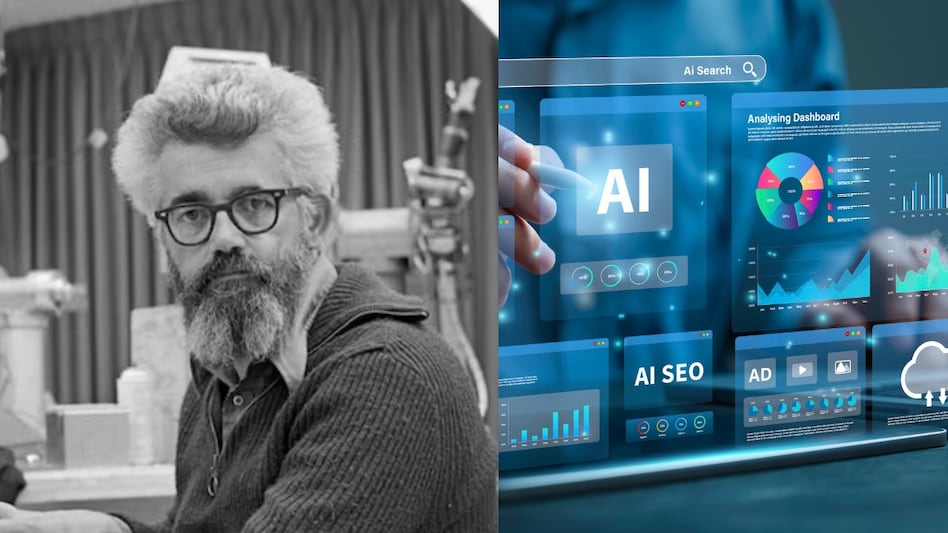
Lucid Motors Slashes Workforce by 18% as New CEO Aims for Streamlining
Lucid Motors has announced a significant reduction in its workforce, laying off 18% of its employees, which equates to a...
TechCrunch | Jun 22, 2026, 14:20
Seedcamp Secures $320 Million to Strengthen Its U.S. Ventures
After nearly two decades of focusing primarily on European markets, Seedcamp has announced a significant shift in strate...
TechCrunch | Jun 22, 2026, 14:20
Preparing for Wealth: Financial Strategies for OpenAI and Anthropic Employees Ahead of IPOs
As OpenAI and Anthropic gear up for their public offerings, employees are on the brink of financial transformation, pote...
Business Insider | Jun 22, 2026, 09:20Nothing Teases Exciting New 'b' Series Smartphone Launch
This year, the London-based tech company Nothing is opting out of unveiling its flagship number series smartphone. Inste...
Business Today | Jun 22, 2026, 09:55