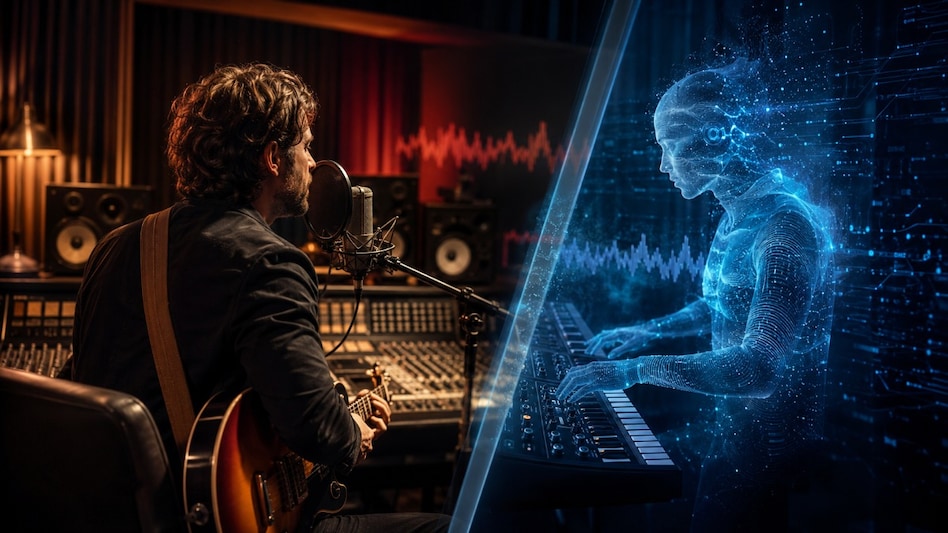
AI-generated music faces a chart ban in Australia. Here's what the new rules say
In a significant move to protect human artistry, Australia has introduced new regulations that exclude songs largely created by artificial intelligence from its music charts. The Australian Recording Industry Association (ARIA) has established a code requiring that all eligible music must be predominantly human-made, ensuring that human creativity remains the heart of recorded music. While artists are still permitted to incorporate AI tools during the production phase, strict limitations have been set on the extent to which AI can contribute to the creative process. To qualify for chart placement, a song must have been entirely written by humans, with live vocals and primary instruments performed by artists themselves. Although AI can be used for mastering and tools like drum machines and auto-tune are allowed, the emphasis remains on human involvement. This decision follows a recent controversy surrounding a cover of Madonna's "Like A Prayer" by Australian DJ Josh Fawaz, which topped the ARIA dance singles chart and garnered over 48 million streams on Spotify. After facing backlash, Fawaz added generative AI credits to the track. Moreover, artists will now be required to disclose their use of AI when submitting music for chart consideration. If it later comes to light that a track was significantly AI-generated, ARIA reserves the right to alter its chart position, potentially demanding the return of any awards associated with it. Artists and their representatives will have the opportunity to contest exclusions from the charts. ARIA's CEO, Annabelle Herd, stated that these changes aim to accommodate technological advancements while safeguarding human creativity. She acknowledged the role of AI in the creative process but expressed concerns over fully AI-generated music, indicating that it poses a unique challenge to the industry. Herd emphasized the importance of maintaining the integrity of music charts, asserting that rewarding unlicensed AI-generated music could jeopardize the very foundation of the recorded music industry. Australia's decision aligns with a broader global trend, as other countries, including Sweden, have begun implementing similar restrictions on AI-produced music in their charts. Additionally, the International Federation of the Phonographic Industry (IFPI) has announced plans to introduce AI guidelines across various regions. Recognizing the ongoing debate about AI's role in creative fields, Australian Prime Minister Anthony Albanese has pledged to ensure strong protections for creatives in the face of AI advancements, affirming that artists should retain control over how their work is utilized in AI training. As the music industry navigates this evolving landscape, the new rules reflect a commitment to celebrating human artistry in an era increasingly influenced by technology.
realme P4x 5G vs vivo Y31t 5G: Which Smartphone Offers the Best Bang for Your Buck?
When it comes to choosing between the realme P4x 5G and the vivo Y31t 5G, potential buyers are faced with distinct advan...
Business Today | Nov 24, 2026, 01:50
Staggering Recovery Rates Highlight Digital Payment Fraud Challenges
The battle against digital payment fraud continues to be an uphill struggle for consumers, with official data revealing ...
Business Today | Nov 24, 2026, 09:30
Instagram Integrates AI Assistant Muse for Enhanced User Experience
In a significant move, Meta has announced the integration of its AI assistant, Muse, directly into Instagram's direct me...
TechCrunch | Nov 24, 2026, 17:25
Emerging AI Chip Design Revolution: A Challenge to Nvidia's Reign
Nvidia, under the leadership of Jensen Huang, faces a significant challenge from the very AI technology it helped to pop...
Business Insider | Nov 24, 2026, 10:10Tidal Takes Bold Step Against AI Music Flood, Set to Remove Millions of Tracks
In a decisive move to combat the overwhelming influx of AI-generated music, Tidal announced on Tuesday its plans to ban ...
TechCrunch | Nov 24, 2026, 17:10