
AI galaxy hunters are adding to the global GPU crunch
NASA is set to launch the Nancy Grace Roman space telescope in September 2026, an impressive eight months ahead of its original schedule. This cutting-edge telescope is anticipated to provide astronomers with a staggering 20,000 terabytes of data throughout its operational life. This influx of information will complement the daily 57 gigabytes of stunning imagery transmitted from the James Webb Space Telescope, which became operational in 2021, as well as the upcoming survey by the Vera C. Rubin Observatory in Chile, expected to generate 20 terabytes of data each night. To put this into perspective, the Hubble Space Telescope, which once represented the pinnacle of space observation technology, only delivers between 1 to 2 gigabytes of data each day. As the volume of data grows, astronomers are increasingly turning to graphic processing units (GPUs) to manage and analyze their findings. Brant Robertson, an astrophysicist at UC Santa Cruz, has been at the forefront of this transformative shift in astronomical research, utilizing data from various missions over the last 15 years. Robertson has collaborated with Nvidia to harness the power of GPUs to tackle complex cosmic questions, starting with advanced simulations related to supernova explosions and now focusing on developing tools to process the overwhelming data coming from new observatories. "There’s been this evolution from examining a few objects to employing CPU-based analysis on vast datasets, and now to GPU-accelerated methodologies," he explained to TechCrunch. Alongside former graduate student Ryan Hausen, he created a deep learning model named Morpheus, designed to sift through large datasets and pinpoint galaxies. Their initial AI analysis of Webb data revealed an unexpected abundance of a particular type of disc galaxy, which has significant implications for our understanding of the universe's evolution. Morpheus is evolving as well; Robertson is transitioning its architecture from convolutional neural networks to the transformer models that have fueled the rise of large language models. This upgrade will enable Morpheus to analyze significantly larger areas at a faster pace. Furthermore, Robertson is developing generative AI models trained on data from space telescopes to enhance the quality of observations captured by ground-based telescopes, which are often affected by atmospheric distortions. Despite advancements in space technology, launching an 8-meter mirror into orbit remains a challenge. Thus, leveraging software to enhance observations from the Rubin Observatory represents a crucial step forward. However, Robertson faces the reality of the global demand for GPU resources. He has utilized the National Science Foundation to establish a GPU cluster at UC Santa Cruz, but it is becoming increasingly outdated as more researchers seek to implement compute-intensive techniques in their studies. Concerns are mounting as the Trump administration has proposed a drastic 50% cut to the NSF’s budget in its latest request. "There’s a strong desire for AI and machine learning analyses, and GPUs are essential for that," Robertson noted. "You have to adopt an entrepreneurial mindset, especially while pushing the boundaries of technology. Universities tend to be risk-averse due to limited resources, so it’s crucial to demonstrate that this is the direction our field is heading."
OpenAI's Micro Keypad: A Novelty for Coders or Just a Confounding Gadget?
Last week, OpenAI made its debut in the hardware landscape with the launch of Micro, a stylish keypad designed to integr...
TechCrunch | Jul 25, 2026, 24:40
Market Turbulence: Four Key Factors Impacting Stocks This Week
This past week has been challenging for the stock market, driven by several significant forces that have created turbule...
CNBC | Jul 25, 2026, 20:05
Unlocking the Secrets of Quantum Gravity: Can AI Help Physics Make a Leap?
The realm of scientific research is undergoing a profound transformation, fueled by the rapid advancements in artificial...
Business Today | Jul 25, 2026, 24:30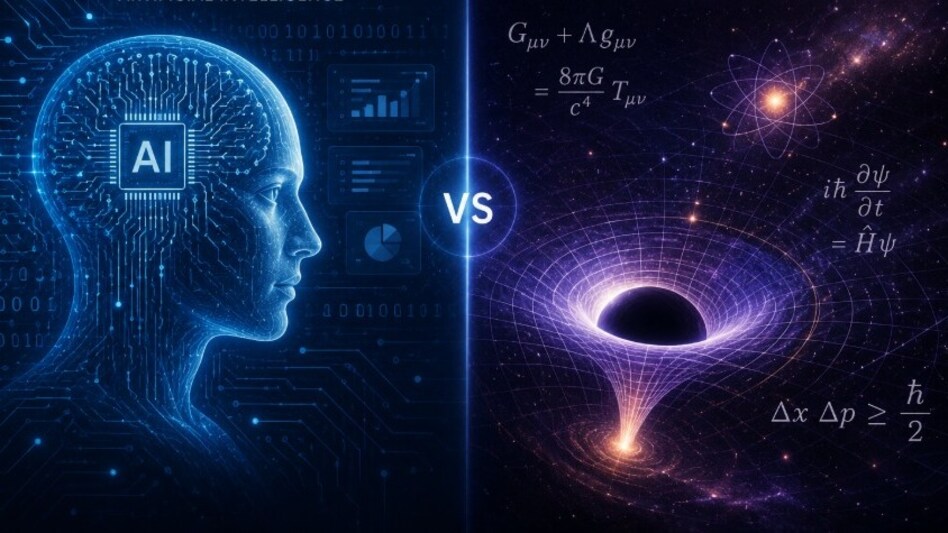
Reclaiming Control: Librarians Host Workshops to Help People Navigate AI Tools
In a lively library setting in South Philadelphia, Charlie Bailey, a local librarian, humorously noted, "Everybody’s on ...
TechCrunch | Jul 25, 2026, 16:20
Shifting Focus: The Cost-Effectiveness of AI Models Takes Center Stage
In recent years, the AI sector has been intensely focused on identifying the most advanced models. While this pursuit re...
Business Insider | Jul 25, 2026, 13:10