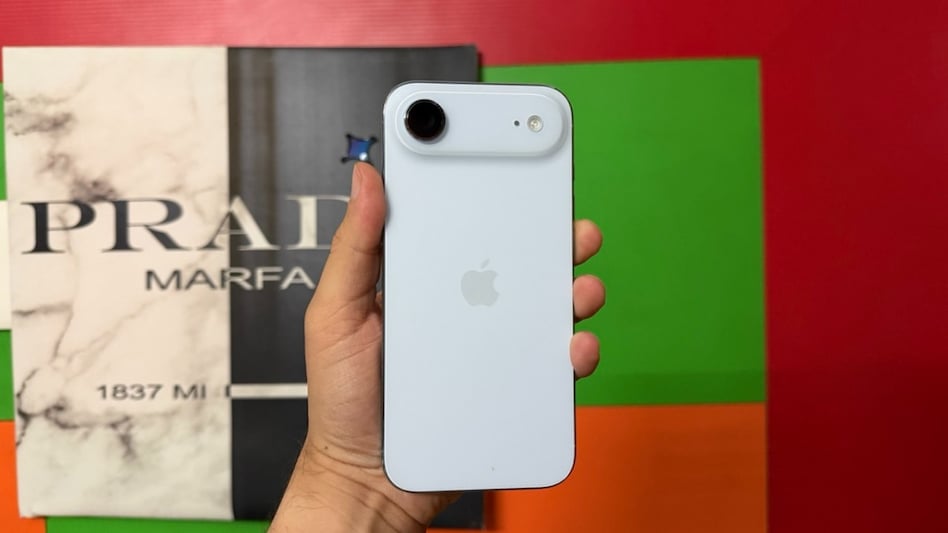
Apple iPhone Air review: Apple’s thinnest iPhone is a bold step into the future
The moment you grasp the iPhone Air, its astonishingly slim profile feels almost surreal. Measuring a mere 5.6mm in thickness and weighing in at 165 grams, this 6.5-inch device feels less like technology and more like a feather in your hand. Throughout my experience with the phone, onlookers frequently asked to hold it, their reactions ranging from astonishment to disbelief at how remarkably thin it truly is. The iPhone Air signifies a paradigm shift in Apple's design philosophy. Instead of piling on cameras and increasing bulk, Apple has streamlined the device, making it the lightest iPhone in its category while achieving the title of the slimmest yet. Its robust titanium frame ensures durability under pressure, and the upgraded Ceramic Shield 2 glass offers enhanced scratch resistance compared to its predecessors. Holding it feels luxurious yet delicate, prompting users to handle it with care. Featuring a 6.5-inch ProMotion display that reaches a stunning brightness of 3,000 nits, the screen performs admirably in various lighting conditions. Colors appear vibrant and realistic, while scrolling is impressively fluid. The iPhone Air finds an ideal balance between the iPhone 16 Plus and the 17 Pro by providing ample screen space without the added weight. The choice of understated colors like Sky Blue and Light Gold adds a sophisticated touch, although some users might miss the more vibrant finishes of earlier models. Despite its slender design, the device is equipped with Apple’s latest A19 chip and boasts a 48MP main camera. The rear lens captures crisp and well-balanced images, while the new 18MP front camera excels at taking wider group selfies without requiring awkward wrist angles. The innovative Dual Capture mode allows users to film from both cameras simultaneously, making it a fun feature for travel vlogs or social media content. However, photography enthusiasts may find the absence of telephoto or ultrawide lenses—available only in Pro models—a drawback. Battery performance highlights the limitations of its compact size. The 3,149mAh battery is capable of lasting a full day under moderate use, but heavy users might find themselves reaching for the MagSafe battery pack. While Apple’s accessory integrates seamlessly, there are faster alternatives on the market that also feature power indicators. Additionally, charging speeds lag behind those of Pro models, with a maximum of 20W for MagSafe and USB 2 data transfer, compared to the USB 3 speeds offered by higher-end counterparts. The single-speaker arrangement feels like a compromise as well. While it delivers adequate sound for casual listening, it lacks the depth and stereo quality found in the iPhone 17 series. For audiophiles, pairing the iPhone Air with AirPods Pro 3 becomes almost essential. Ultimately, the iPhone Air transcends mere performance metrics; it stands as a bold design statement, showcasing Apple’s commitment to a sleeker, more efficient future. The combination of a sturdy titanium frame, an exceptional display, and an overall sophisticated build marks it as an engineering achievement. While it does come with certain trade-offs, these appear to be deliberate choices rather than oversights. Priced starting at Rs 1,19,900 for the 256GB variant, the iPhone Air effectively replaces the iPhone 16 Plus. It's poised to attract design aficionados looking for a fresh take on smartphones. For those who prioritize power and features, however, the Pro models may still be the better choice. Nonetheless, for many, the iPhone Air represents one of Apple's most thrilling offerings in recent years, daring to break the mold.
The Shift in Human Cognition: Embracing AI as a Collaborative Tool
As technology continues to evolve, a notable shift is occurring in the relationship between humans and artificial intell...
Business Insider | Jul 25, 2026, 09:50Finland Unveils World's Largest Sand Battery to Tackle Renewable Energy Challenges
In a groundbreaking move to address the critical issue of renewable energy intermittency, a small town in southern Finla...
CNBC | Jul 25, 2026, 05:35
Unlocking the Secrets of Quantum Gravity: Can AI Help Physics Make a Leap?
The realm of scientific research is undergoing a profound transformation, fueled by the rapid advancements in artificial...
Business Today | Jul 25, 2026, 24:30
Nvidia Strikes Major Deal with SK Hynix to Secure AI Memory Supply
Nvidia has successfully forged a significant partnership with South Korea's SK Hynix to secure memory supplies essential...
CNBC | Jul 25, 2026, 05:15
Vietnam's Controversial Social Media Proposal: A New Approach for Youth Engagement
Vietnam is contemplating a distinctive approach to youth social media regulations, diverging from the more common outrig...
TechCrunch | Jul 24, 2026, 21:25