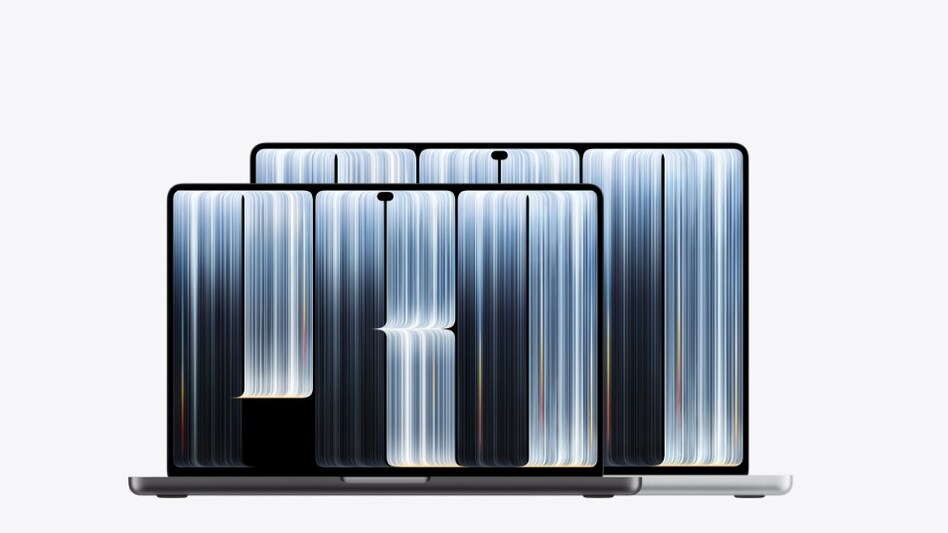
Jobs said no to a touchscreen Mac. Ternus says it’s Apple’s next big bet
In a significant shift for Apple, the company has unveiled its first MacBook Pro featuring a touchscreen, a move that contrasts sharply with the late Steve Jobs’ stance against such technology. Back in 2010, Jobs expressed strong reservations about touchscreens on Macs, deeming them ergonomically unfavorable. Fast forward to October 2026, and under the leadership of new CEO John Ternus, Apple is embracing this innovation with the launch of the MacBook Pro that claims to have 'the world's best display in a Pro laptop.' Ternus, who became CEO just two months prior, is already making waves in the tech industry with a series of hardware releases, including this touch-enabled MacBook Pro and the iPhone Duo. This marks a notable pivot for Apple, especially as the tech landscape increasingly focuses on artificial intelligence. So, why has Apple decided to introduce a touchscreen MacBook Pro now? Sixteen years ago, Jobs firmly rejected the concept, stating that touch surfaces are uncomfortable when used vertically. He believed that users would find it more convenient to keep their hands on the keyboard or trackpad rather than repeatedly reaching up to the screen. His viewpoint was echoed by other Apple executives over the years, who argued that the trackpad provided a superior user experience. However, Ternus seems to have a fresh perspective on user interaction with MacBooks. He indicated that Apple has been exploring touchscreen technology for a while, stating, "The Mac is first and foremost an indirect input device. But there are times when touch is comfortable and handy." He emphasized that the integration of touch should not compromise the product's design or function. The new MacBook Pro combines a sleek OLED display with touch capabilities, ensuring that it remains lightweight and efficient. Additionally, Apple’s hardware chief, Johny Srouji, highlighted the company's advancements in display technology and silicon chips that facilitated this new touch integration without sacrificing quality. Marketing chief Greg Joswiak pointed out that professional users have long requested touch support, especially as younger generations are accustomed to touchscreen devices. The latest MacBook Pro is not just about touch; it boasts upgraded features such as an advanced Tandem OLED Panel, which Apple has branded as 'PROLED XDR.' This display offers a remarkable contrast ratio and peak brightness, allowing for direct interaction like tapping and drawing. It also incorporates a Dynamic Island similar to that found on the iPhone and features slimmer bezels for an enhanced screen experience. With these innovations, Apple appears poised to redefine the laptop experience, merging traditional computing with modern touch functionality, catering to the evolving needs of its users.
Jio Unveils Exciting New Plans with Unlimited 5G Data for the New Year
Reliance Jio has rolled out its latest prepaid recharge offerings, dubbed 'Happy New Year 2.0', featuring unlimited 4G a...
Business Today | Nov 24, 2026, 10:20
Staggering Recovery Rates Highlight Digital Payment Fraud Challenges
The battle against digital payment fraud continues to be an uphill struggle for consumers, with official data revealing ...
Business Today | Nov 24, 2026, 09:30
Mathematicians React to Controversial Joke Over Lengthy Proof of Riemann Hypothesis
Tensions are rising in the mathematical community following a controversial comment made by Levent Alpöge, a researcher ...
Business Insider | Nov 24, 2026, 17:30Figma Engineer Files Lawsuit Claiming Workplace Harassment and Retaliation
A former engineer at Figma has initiated legal action against the design software firm and its CEO, Dylan Field, citing ...
TechCrunch | Nov 23, 2026, 23:15
Emerging AI Chip Design Revolution: A Challenge to Nvidia's Reign
Nvidia, under the leadership of Jensen Huang, faces a significant challenge from the very AI technology it helped to pop...
Business Insider | Nov 24, 2026, 10:10