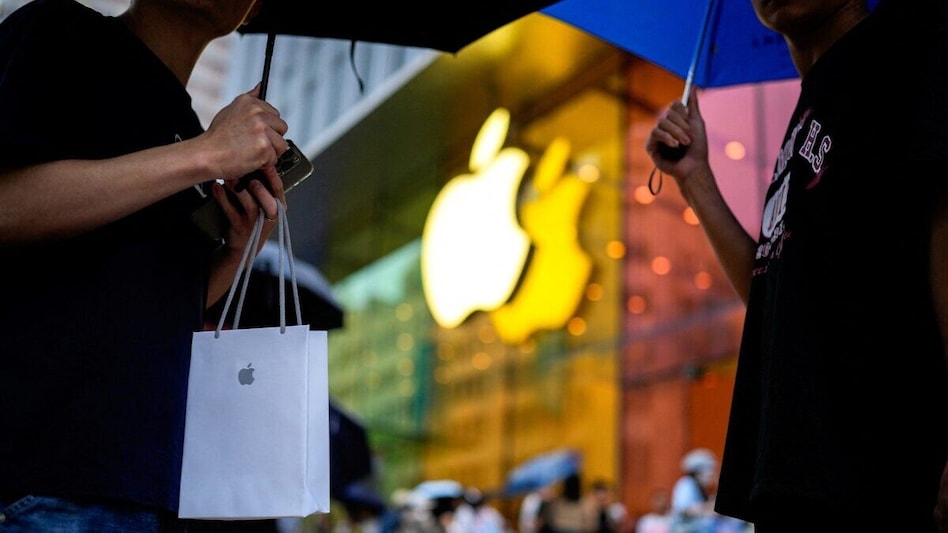
Apple to close Dalian outlet on Aug 9, marks first store shutdown in Mainland China
In a significant move, Apple has announced the closure of one of its two retail locations in Dalian, marking the tech giant's first direct store shutdown on the Chinese mainland. This decision comes at a time when iPhone sales in China are facing headwinds, highlighting the evolving landscape of retail in the area. The Dalian store, situated within the prominent Parkland shopping centre, will officially close its doors on August 9. Following this closure, the city, which has a population of approximately 7.5 million, will be left with only one Apple-owned store, located in the nearby Olympia 66 shopping complex, just a short drive away. According to a report from the South China Morning Post, the closure is attributed to operational changes at the mall, which has recently undergone a rebranding from Parkland to Intime City due to a change in management. In a statement, Apple emphasized its ongoing commitment to customer service throughout Greater China while noting that other retailers have also exited the shopping complex, suggesting a broader trend in retail shifts. Apple has assured that employees affected by this closure will receive opportunities for transfers to other retail locations. Currently, Apple operates a total of 57 stores across Greater China, encompassing mainland China, Hong Kong, Macau, and Taiwan. On August 16, the company plans to open a new store in Shenzhen, indicating that despite some closures, Apple is still pursuing its retail strategy in the region. This closure comes as Apple faces a challenging market in China. In the second quarter of 2024, the company's sales in the region fell by 2.3% to $16 billion, which was below analyst expectations of $16.8 billion. This decline is set against a backdrop of economic difficulties in China, which include deflation, sluggish retail activity, and a significant drop in home prices that are collectively impacting consumer confidence. Compounding Apple's challenges, Huawei Technologies has reclaimed its position as the leading smartphone manufacturer in China, further intensifying competition in the market. In the same quarter, Vivo, once the market leader, fell to second place, while Oppo and Xiaomi followed closely behind. In response to these challenges, Apple is increasing its focus on India as part of its 'China Plus One' strategy, aimed at diversifying its supply chain amid ongoing US-China trade tensions. Recent data from Canalys shows that India has now become the top supplier of smartphones to the US, overtaking China. This shift is largely due to Apple's efforts to accelerate the relocation of iPhone assembly to India. As Apple navigates the complexities of the global market, its strategic pivot towards India and the selective closure of stores in China underscore both its adaptive strategies and the changing dynamics within the smartphone industry.
Anthropic Explores Major Computing Partnership with Meta
Anthropic is reportedly in early discussions with Meta to secure a lease for computing power, as confirmed by a source f...
CNBC | Jul 17, 2026, 16:55
Transform Your Comfort: The Dyson Hot+Cool HF1 Review
The Dyson Hot+Cool HF1 is an innovative 2-in-1 appliance designed to provide optimal comfort throughout the year, seamle...
TechCrunch | Jul 17, 2026, 18:25
Anand Mahindra: AI Will Transform, Not Replace, India's IT Landscape
Anand Mahindra, Chairman of the Mahindra Group, has asserted that artificial intelligence (AI) will fundamentally transf...
Business Today | Jul 17, 2026, 16:20
Xi Jinping Advocates for Open-Source AI Collaboration at Global Conference
At the World Artificial Intelligence Conference held in Shanghai, Chinese President Xi Jinping emphasized the necessity ...
Business Insider | Jul 17, 2026, 17:10Patreon Takes a Stand Against AI Content Scrapers with New Blocking Measures
Patreon, the popular membership platform catering to content creators, is intensifying its efforts to prevent artificial...
TechCrunch | Jul 17, 2026, 15:50