Apple Pay is finally in India, but can it challenge UPI? Here's what you need to know
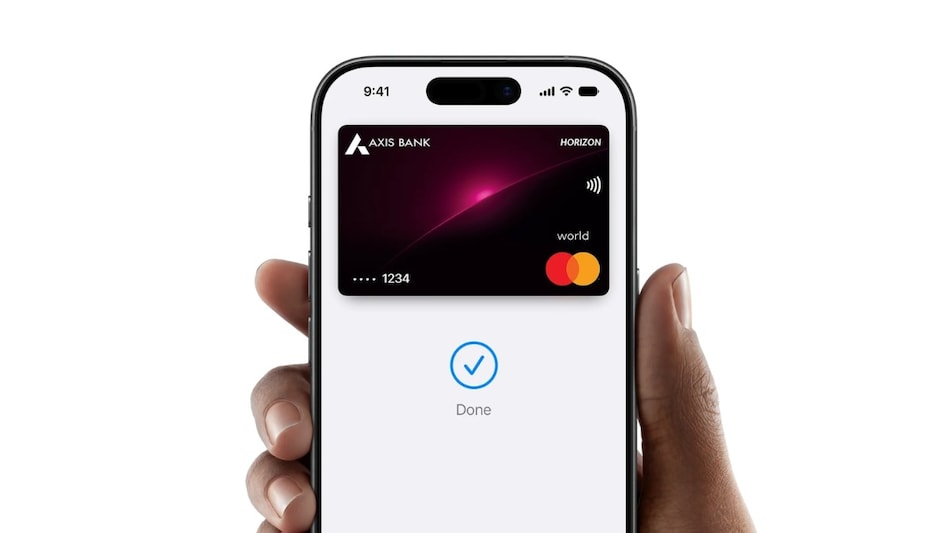
Apple has officially unveiled its digital payment service, Apple Pay, in India, marking its entry into the market after 12 years of global presence. Initially compatible with iPhone, iPad, and Apple Watch, Mac support is anticipated to arrive in the near future. In collaboration with Axis Bank, Apple Pay enables users to make contactless and online transactions using eligible Visa and Mastercard cards. However, unlike its competitors, such as Google Pay and PhonePe, Apple Pay does not currently support UPI payments, relying instead on cards issued by participating banks. The introduction of Apple Pay raises questions about its potential impact on India's well-established Unified Payments Interface (UPI). While Apple Pay operates on a card-based system, UPI facilitates direct bank transfers, allowing users to send money by scanning a QR code or entering a UPI ID. This distinction in functionality highlights the different approaches to digital transactions in the country. India's UPI has been a game-changer in the digital payment landscape, simplifying transactions for users. Apple Pay, on the other hand, digitizes users' existing credit and debit cards, storing them in the Wallet app. Users can make contactless payments by holding their compatible device near an NFC-enabled terminal and authenticating via Face ID, Touch ID, or their device passcode. Additionally, Apple Pay supports online and in-app purchases, utilizing NFC technology for seamless transactions. Counterpoint analyst Tarun Pathak commented on the launch via an X post, stating, “The Apple Pay launch strengthens Apple's ecosystem in India and adds a services layer in what is now its third-largest iPhone market globally by volume.” However, he cautioned that UPI will likely remain the dominant force in everyday transactions across the country. At its launch, Apple Pay supports eligible Axis Bank credit cards on both Visa and Mastercard networks, although RuPay cards are not included. Apple is reportedly in talks with other major banks, including HDFC Bank and ICICI Bank, but no additional partnerships have been confirmed yet. The company claims that Apple Pay is accepted at “millions of merchants,” including Apple Store locations, Blinkit, Chaayos, Croma, Ixigo, Reliance brands, Tata 1mg, and Zomato. Partnerships with payment service providers like Cashfree, JusPay, Mswipe, Paytm, PayU, Pine Labs, Razorpay, and Worldline have also been established to broaden its acceptance. With UPI already entrenched in the Indian market, evidenced by its record of 24.51 billion transactions worth Rs 29.82 lakh crore in August 2026, Apple Pay faces significant challenges. The average UPI transaction during that period was around Rs 1,217, underscoring its popularity for daily purchases. Given that Apple Pay is currently limited to users with compatible devices and eligible Axis Bank cards, it is unlikely to serve as a direct alternative to UPI. Instead, it may function alongside UPI, catering to a specific segment of users looking for card-based payment solutions.
Emerging AI Chip Design Revolution: A Challenge to Nvidia's Reign
Nvidia, under the leadership of Jensen Huang, faces a significant challenge from the very AI technology it helped to pop...
Business Insider | Nov 24, 2026, 10:10Mathematicians React to Controversial Joke Over Lengthy Proof of Riemann Hypothesis
Tensions are rising in the mathematical community following a controversial comment made by Levent Alpöge, a researcher ...
Business Insider | Nov 24, 2026, 17:30Investing in the Future: Solar and Battery Solutions for AI Data Centers
The challenge of powering AI data centers has emerged as a pivotal issue in the current technological landscape. Over th...
TechCrunch | Nov 24, 2026, 16:25
Supertake Secures $20 Million to Revolutionize AI-Driven Investment Portfolios
Supertake, an innovative AI investing startup, is on a mission to transform how individuals engage with the stock market...
TechCrunch | Nov 23, 2026, 22:10
Navigating the AI Landscape: Why CEOs Must Embrace Technology Literacy
In the rapidly evolving world of corporate India, companies are increasingly investing in artificial intelligence (AI), ...
Business Today | Nov 24, 2026, 07:35