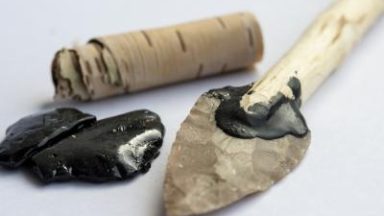
Never mind Band-Aids, Neanderthals had antiseptic birch tar
Recent discoveries suggest that Neanderthals may have employed birch tar not just as an adhesive but also as a means to combat infections and insect bites. This practice parallels the use of birch bark tar by various Indigenous cultures today, such as the Mi’kmaq of eastern Canada, who utilize it for treating skin infections and preventing wounds from becoming infected. Archaeological findings indicate that Neanderthals had the knowledge to extract birch tar, which they primarily used to attach tools and weapons. A new study has demonstrated that this ancient substance could have served medicinal purposes, particularly for the injuries they frequently sustained. The research tested distilled birch tar against common bacteria, specifically Staphylococcus aureus and Escherichia coli, confirming its potential as a healing agent. In various Indigenous languages, what we refer to as “birch tar” has multiple names, and its consistency can vary significantly—from a viscous liquid to a solid resin—based on the heating process following extraction. The Mi’kmaq, for instance, favor a more fluid variant known as maskwio’mi for wound care. To analyze the effectiveness of birch tar against bacteria, researchers collected birch bark rolls from species known to have been present at Neanderthal sites. They experimented with different extraction techniques, including a method involving burning the bark alongside a flat rock, which allows the resin to accumulate beneath it, and a more efficient approach using a clay container buried in dirt. Modern Indigenous practices also include using a tin can for the extraction process. Led by archaeologist Tjaark Siemssen from the University of Cologne and the University of Oxford, the team conducted tests on the resulting tar against cultures of Staphylococcus aureus, notorious for skin infections and antibiotic resistance, as well as the gut bacterium E. coli, commonly associated with foodborne illnesses.
Electric Truck Innovator Harbinger Secures Major Funding from Erebor Bank
Harbinger, an emerging player in the electric truck industry, has secured a significant financial boost from Erebor Bank...
TechCrunch | Nov 24, 2026, 18:00
Nvidia's CEO Dismisses Succession Planning Amid Controversy
Nvidia's co-founder and CEO, Jensen Huang, recently addressed employees in a comprehensive all-hands meeting, touching o...
TechCrunch | Nov 24, 2026, 22:50
Walmart Partners with Meta's Muse for a Smarter Black Friday Shopping Experience
The future of shopping is now, as Walmart embraces the integration of artificial intelligence into its retail strategy. ...
TechCrunch | Nov 24, 2026, 21:45
Navigating the AI Job Landscape: Challenges and Opportunities Ahead
The landscape of employment is undergoing a significant transformation as artificial intelligence (AI) permeates various...
Business Insider | Nov 24, 2026, 22:40Maple Secures $5.3 Million to Revolutionize Data Privacy in AI
As artificial intelligence becomes increasingly capable of accessing sensitive information such as files, emails, and ca...
TechCrunch | Nov 24, 2026, 21:30