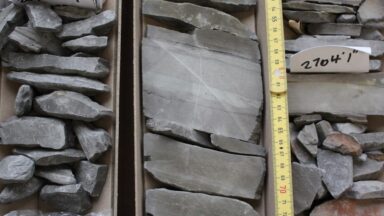
Feedbacks upon feedbacks: Rock weathering and the climate
Since the early 1980s, scientists have recognized that the slow process of rock erosion and weathering plays a crucial role in regulating atmospheric CO2, thereby influencing Earth's climate over geological timescales. Recent research, however, has unveiled a surprising twist: erosion can also release CO2 by oxidizing organic carbon found in sediments that are being eroded. A groundbreaking study published in the journal Nature Communications delves into the geological record to explore the interplay between these two opposing processes—CO2 removal through rock weathering and CO2 emissions from organic carbon weathering. Led by Dr. Madeleine Stow from the University of Oxford, the research team, comprised of experts from the UK and France, focused on a significant period of global warming known as the Toarcian Ocean Anoxic Event, which occurred approximately 183 million years ago. The findings indicate that the erosion of organic carbon during this time exacerbated climate warming, raising concerns about similar mechanisms potentially at play in today's climate crisis. However, the extent to which historical events can predict current trends remains uncertain. The Toarcian warming is among a select few climate change episodes in Earth's history linked to large volcanic eruptions, categorized as large igneous provinces, some of which correlate with mass extinction events. Notably, the Toarcian event was initiated by extensive volcanic activity in regions that are now South Africa and Antarctica, which were once connected. This volcanic episode triggered a significant increase in global temperatures by 6° to 7° Celsius, leading to drastic shifts in plant and dinosaur species and resulting in mass extinctions, particularly among coral and other marine life. Bob Hilton, a coauthor and principal investigator of the study, emphasized the significance of this well-studied event, noting that the mechanisms driving it, including the role of large igneous provinces, are well understood and highlight the complex relationship between volcanic activity and climate dynamics.
Electric Truck Innovator Harbinger Secures Major Funding from Erebor Bank
Harbinger, an emerging player in the electric truck industry, has secured a significant financial boost from Erebor Bank...
TechCrunch | Nov 24, 2026, 18:00
Nvidia's CEO Jensen Huang Returns Amid Scandal and Government Intervention
In a surprising turn of events, Nvidia's board has reinstated Jensen Huang as CEO and president just two weeks after his...
TechCrunch | Nov 24, 2026, 13:45
Saudi Engineer Faces Legal Battle Over Alleged Espionage Using AI Tech
A Saudi engineer employed by OpenAI, Abdulrahman Alfozan, is at the center of a legal dispute as prosecutors allege he u...
Business Insider | Nov 23, 2026, 23:50Mathematicians React to Controversial Joke Over Lengthy Proof of Riemann Hypothesis
Tensions are rising in the mathematical community following a controversial comment made by Levent Alpöge, a researcher ...
Business Insider | Nov 24, 2026, 17:30Investing in the Future: Solar and Battery Solutions for AI Data Centers
The challenge of powering AI data centers has emerged as a pivotal issue in the current technological landscape. Over th...
TechCrunch | Nov 24, 2026, 16:25