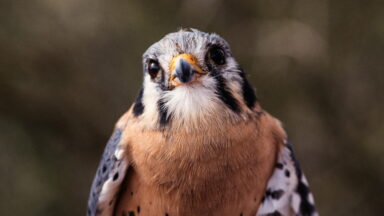
Tiny falcons are helping keep the food supply safe on cherry farms
Each spring, raptors make their way back to nesting grounds across northern Michigan, with the American kestrel (Falco sparverius)—the smallest of these birds of prey—soaring through cherry orchards in search of minuscule creatures to hunt. While this quest sustains the kestrels, it also provides a significant boon to local cherry farmers. For decades, fruit growers have engaged in a mutually beneficial relationship with kestrels, installing nesting boxes to attract these birds. In return, the kestrels help control populations of pests such as mice, voles, and songbirds that threaten unharvested crops. Recent research indicates that these clever raptors do more than just reduce crop damage; they may also play a crucial role in mitigating the risk of food-borne illnesses. A study published in November in the *Journal of Applied Ecology* reveals that kestrels contribute to keeping harmful pathogens away from fruit destined for consumers. By preying on and scaring off small birds that carry these pathogens, orchards with nesting kestrels reported a significant reduction in pest activity. Specifically, orchards that welcomed these birds experienced an 81% decrease in crop damage—from bite marks to missing fruit—and a 66% decline in branches tainted by bird droppings. Olivia Smith, the lead author of the study and an assistant professor of horticulture at Michigan State University, noted, "Kestrels are not very costly to introduce into orchards, yet they effectively deter unwanted bird species. Plus, they are well-liked by people, making them an appealing option for pest management." Developing effective pest management strategies is crucial for cherry farmers, as pests can cause significant damage, exacerbating challenges already faced by the cherry industry, including climate change, labor shortages, and fluctuations in international trade. To combat pest-related damage, growers have resorted to various methods, including nets, noisemakers, scarecrows, pesticides, and the removal of natural habitats surrounding their crops.
Shifting Focus: The Cost-Effectiveness of AI Models Takes Center Stage
In recent years, the AI sector has been intensely focused on identifying the most advanced models. While this pursuit re...
Business Insider | Jul 25, 2026, 13:10The Rise of AI Distillation: A Controversial Technique Sparks Debate in Tech and Government
In recent discussions, a once-obscure topic in artificial intelligence has surged to the forefront of debates among tech...
CNBC | Jul 25, 2026, 12:15
Crisis Averted: Power Line Failure Highlights Urgent Need for Data Center Resilience
A power line failure near Washington, DC, recently showcased a significant challenge faced by the electrical grid due to...
TechCrunch | Jul 25, 2026, 13:50
Linux Creator Challenges Developers: Embrace AI or Fork Off!
In a recent discussion surrounding the use of AI in software development, Linus Torvalds, the founder of Linux, voiced h...
Business Insider | Jul 26, 2026, 13:10Navigating the Future: Are Wearable AI Gadgets Ready to Transform Our Lives?
Imagine a typical workday where you and your colleagues sport discreet recorders on your clothing, while smart glasses s...
CNN | Jul 26, 2026, 16:10