
'We're still hiring more engineers...': AMD CEO Lisa Su says AI won't replace jobs
Lisa Su, the CEO of AMD, has addressed rising concerns regarding the impact of artificial intelligence (AI) on employment, asserting that the technology is more likely to boost productivity than to replace workers. In a recent interview with Wired, Su emphasized that she does not align with the apprehensions voiced by some tech leaders who fear that AI could result in massive job losses across various sectors. "People are the judges of what truth is, and we’re still hiring more and more engineers because they’re the final arbiters of our engineering," Su stated, highlighting the ongoing need for human talent in the tech industry. While she acknowledged the increasing discussions surrounding artificial general intelligence (AGI), she dismissed the notion that AI could outstrip human intelligence or lead to catastrophic outcomes. Su explained that current AI technologies are primarily designed to manage routine tasks and are still in the early stages of development. She believes that the significant advancements will emerge when AI can tackle complex challenges that typically require years of effort. For instance, she mentioned semiconductor design, which usually takes AMD around three years to complete. "What does that look like if I could do that in six months?" she posed, illustrating her point about potential efficiency gains. She drew comparisons between AI and previous technological advancements, suggesting that while the internet revolutionized data movement, AI focuses on enhancing productivity. Su noted that AI could be likened to the Industrial Revolution in terms of its foundational impact on society. Looking ahead, she predicts that as AI evolves, it will become an integral part of daily life, much like the internet has today, with a trajectory that will ultimately overshadow its current capabilities. Su expressed optimism about the future, acknowledging that while there may be challenges along the way, she remains confident in humanity's ability to adapt. "I would bet on humanity being OK," she remarked. She is particularly enthusiastic about AI's potential in the healthcare sector, believing it could revolutionize drug discovery and patient care by reducing trial and error and accelerating medical advancements. "We should be able to cure diseases. This is a perfect use case for AI," she concluded, hinting at the possibility of what some might term "superintelligence."
Reimagining Data Centers: Building Community Connections Through Innovative Design
In the heart of a California desert oasis, a groundbreaking initiative is changing the perception of data centers. A new...
Business Insider | Jul 18, 2026, 08:25The Shift in Electric Vehicle Offerings: A Look at U.S. Discontinuations
The automotive landscape is undergoing a significant transformation as various companies announce the discontinuation of...
TechCrunch | Jul 18, 2026, 16:45
Nvidia CEO's Iconic Leather Jacket Fetches Nearly $1 Million at Auction
Jensen Huang, the CEO of Nvidia, is known for his distinctive style, often sporting a leather jacket that has become his...
CNBC | Jul 17, 2026, 23:25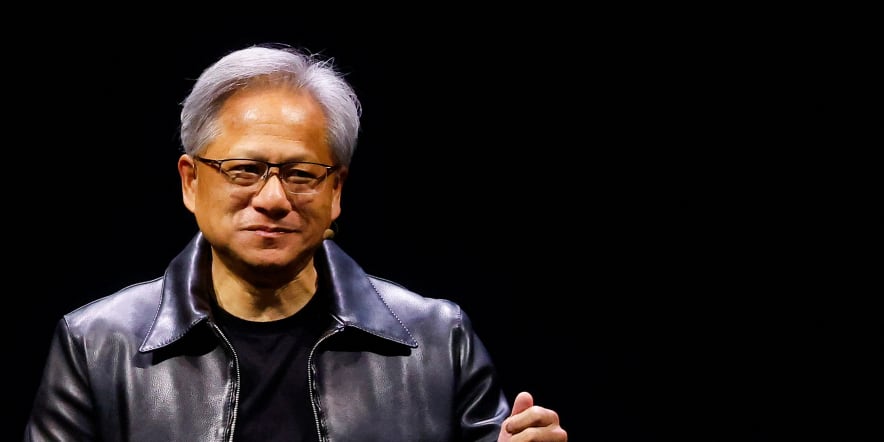
Final Call for Australian Startups: Seize Your Chance at Stripe x Startup Battlefield
Time is running out for aspiring Australian entrepreneurs! In just 48 hours, the opportunity to showcase your startup at...
TechCrunch | Jul 17, 2026, 23:25
Meet the Innovators: 18 Startups Revolutionizing Dating and Social Networking
A new wave of startups is emerging, poised to transform the landscape of dating and social networking. These innovative ...
Business Insider | Jul 18, 2026, 15:50