
Amazon Kuiper plans India debut next year, lags satellite communication peers
Amazon's Project Kuiper is gearing up to make its entry into the Indian satellite internet market, targeting a launch in the upcoming year. However, it faces significant competition from established players like Starlink, OneWeb, and Jio Satellite. Sources familiar with the situation indicate that Kuiper is currently working to establish a sufficient satellite constellation and obtain the necessary licenses and approvals to commence operations in India. The delay in launching services stems from the need for Kuiper to align its network and ground system designs with the stringent security conditions mandated by the Indian government. Ongoing discussions with government officials are expected to culminate in the completion of compliance requirements by the end of this year. Like its competitors, Kuiper has requested permission to serve other regions from its Indian-based satellite systems. Currently, the Indian government has granted operational approvals to three satellite providers: OneWeb, the Jio-SES joint venture, and Elon Musk’s Starlink. However, consumers will not have access to satellite internet services until the government allocates the necessary spectrum and finalizes the associated fees. According to KPMG, the Indian satellite communication market is projected to reach $20 billion by 2028. In May, the Telecom Regulatory Authority of India (Trai) proposed that satellite companies pay 4% of their adjusted gross revenue as spectrum charges, in addition to an annual fee of ₹500 per subscriber for fixed satellite services in urban areas. Despite trailing behind its rivals, sources indicate that Kuiper views its market entry through a unique lens, focusing on its own progress rather than competing directly with others. The company is currently engaged in fulfilling compliance requirements, including the local storage of data, which is critical for adhering to India's national security protocols. In October 2023, Kuiper submitted its application for the global mobile personal communication by satellite (GMPCS) license, which is essential for launching its services in India. The company has also sought approval from the Indian National Space Promotion and Authorisation Centre (IN-SPACe) for its satellite constellation. With over 100 satellites already in orbit, Kuiper has ambitious plans to deploy a total of 3,200 satellites to create a robust satellite internet network. In contrast, its competitors Starlink and OneWeb have significantly larger satellite fleets, with Starlink operating over 6,700 satellites and OneWeb having 648. In India, Kuiper has established a small team focused on understanding local market needs and building relationships with enterprise customers. The team is primarily engaged in business development and regulatory affairs, with recent job postings for key positions in the country. Despite being behind in the race, industry experts suggest that Kuiper could leverage its parent company Amazon's extensive enterprise client base and e-commerce platform to capture both B2B and retail market segments. Globally, Kuiper has begun securing early customer contracts, including agreements with American media company Vrio Corp’s DIRECTV and Australia’s NBN for satellite internet services. As the Indian government continues to refine its satellite internet regulations, Kuiper and its competitors are advocating for the ability to serve neighboring countries from their Indian gateways. This strategy aims not only to reduce capital expenditures but also to provide viable services to smaller nations where establishing ground infrastructure may not be cost-effective. The successful navigation of compliance challenges, including data localization and security measures, is crucial for Kuiper's ambitions in India. The government has mandated that telemetry and control operations for satellites serving Indian users must occur within the country, ensuring data sovereignty and national security. Satellite providers must also outline their plans for increasing local manufacturing in India, targeting at least 20% indigenization of their ground segment within five years of launching commercial operations.
Even Realities Achieves $1 Billion Valuation Following $150 Million Investment Round
Even Realities, a startup based in Shenzhen, has made waves in the smart glasses market by securing $150 million in a pr...
TechCrunch | Jul 06, 2026, 09:35
WhatsApp Transforms iPad into a Standalone Device: Here's What You Need to Know
WhatsApp is set to revolutionize the experience for iPad users with a new update that allows them to register their acco...
Business Today | Jul 06, 2026, 11:15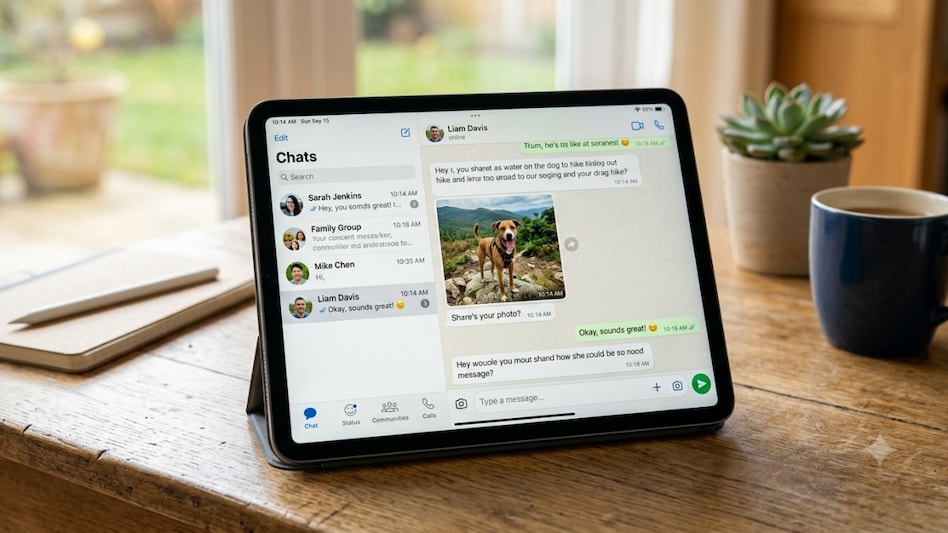
Small Businesses Embrace AI: A Double-Edged Sword
Small businesses are increasingly looking to artificial intelligence as a means to innovate and streamline their operati...
Business Insider | Jul 06, 2026, 14:00Ex-Apple Engineers Launch $33 Million Fund to Revolutionize Manufacturing Startups
In a bold move to reshape the manufacturing landscape, two former Apple executives, Simon Lancaster and Sabrina Paseman,...
Business Insider | Jul 06, 2026, 13:05Microsoft Restructures: 4,800 Jobs Cut as Xbox Division Faces Major Downsizing
In a significant restructuring move, Microsoft has announced the elimination of 4,800 jobs, which accounts for 2.1% of i...
CNBC | Jul 06, 2026, 13:50