Amazon AI exec predicts first 'commercially useful' quantum computers in 5-7 years
Amazon's leading artificial intelligence executive has projected that the first 'commercially useful' quantum computers will emerge within the next five to seven years. Peter DeSantis, who recently took the helm of a new division at Amazon dedicated to AI models, chips, and quantum technology, shared these insights during an interview with CNBC. DeSantis expressed optimism about the evolution of quantum computing, likening its growth trajectory to that of semiconductor technology. "I genuinely believe that in the next five to seven years, we will start to see the initial small-scale quantum computers that can be commercially utilized," he stated. He further elaborated that this technology is expected to expand in capability, akin to Moore's Law, which asserts that the number of transistors on a microchip doubles approximately every two years, resulting in increasingly powerful semiconductors. The anticipation surrounding quantum computing stems from its potential to tackle complex problems that current classical computers struggle with. Traditional computing relies on bits, which represent data as either a one or a zero. In contrast, quantum computing utilizes quantum bits, or qubits, which can embody both states simultaneously, offering new avenues for computation. DeSantis clarified a common misconception about quantum computers, noting that they are not simply faster versions of classical computers. Instead, he emphasized that they are designed to efficiently address specific types of challenges that conventional systems cannot handle effectively. As the competition heats up in the quantum computing arena, major technology firms such as Microsoft, Google, and IBM are actively developing their own solutions, alongside numerous startups. Amazon also introduced its quantum chip, Ocelot, last year, aimed at overcoming the significant hurdle of error correction in quantum systems. DeSantis' timeline aligns closely with various predictions from the tech industry. In contrast to Google's quantum division, which suggested that practical applications could be realized within five years, Microsoft has set its sights on achieving a commercially viable quantum machine by 2029. Conversely, Nvidia's CEO hinted that achieving useful quantum computers might take as long as 15 years, although he later retracted that statement. Looking ahead, DeSantis identified fields such as chemistry and materials science as prime candidates for initial quantum computing applications. He stated, "These areas currently lack the high-fidelity simulations that classical computers cannot provide, and quantum computing promises to deliver significant advancements in these domains."
The Aluminum Foil Trend: A DIY Shield Against Wireless Identity Theft
Have you noticed an unusual trend where people are wrapping their wallets in aluminum foil? This peculiar practice has e...
Business Today | Jul 25, 2026, 02:45
Unleashing the Power of AI: The 5 Smartphones Redefining Mobile Photography
Artificial Intelligence (AI) is transforming our daily experiences, permeating various aspects of technology, including ...
Business Today | Jul 26, 2026, 07:05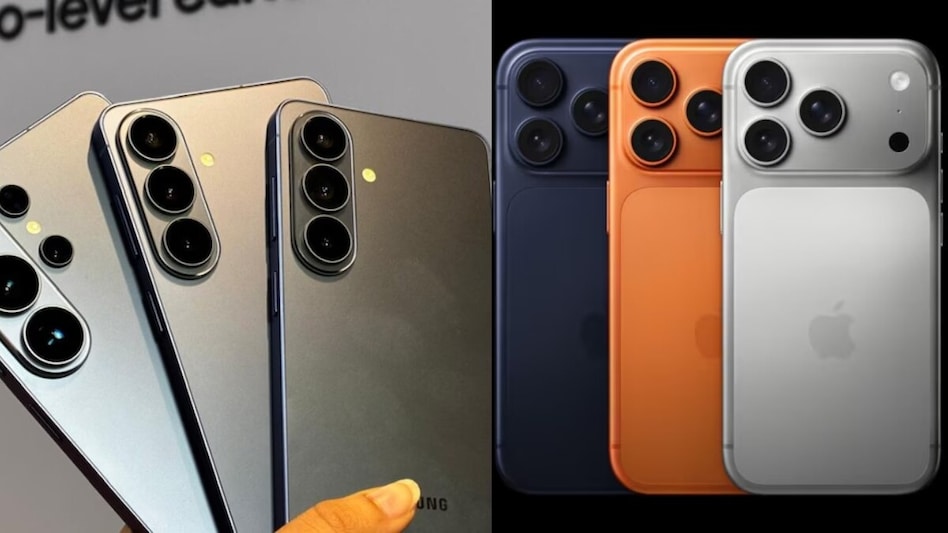
Finland Unveils World's Largest Sand Battery to Tackle Renewable Energy Challenges
In a groundbreaking move to address the critical issue of renewable energy intermittency, a small town in southern Finla...
CNBC | Jul 25, 2026, 05:35
Navigating the AI Landscape: Insights from a Former OpenAI Intern
As the demand for expertise in artificial intelligence surges, many are seeking ways to break into this dynamic field. H...
Business Insider | Jul 26, 2026, 10:10Vision Breakthrough: US Startup Launches Groundbreaking Retina Chip in Europe
Science Corp is poised to introduce a revolutionary retina chip in Europe, designed to restore partial vision for indivi...
Business Today | Jul 25, 2026, 01:00