Amazon pulls the plug on 'Blue Jay' warehouse robot after only a few months
In a surprising turn of events, Amazon has decided to discontinue its Blue Jay warehouse robot only a few months after its launch. Introduced in October for same-day delivery operations, the multi-armed robotic system was quietly shelved in January, as confirmed by sources familiar with the matter. Employees involved in the Blue Jay initiative have been reassigned to other projects within the company's robotics division. This development highlights the significant hurdles that companies face in creating practical and cost-efficient AI robotics technology. While generative AI has seen tremendous advancements in the digital landscape due to readily available training data, the physical world presents a much tougher challenge. Acquiring useful data and managing robots in real-world environments can be daunting tasks. Terrence Clark, an Amazon spokesperson, explained that while Blue Jay itself is being discontinued, its core technologies will be repurposed for other projects within Amazon's extensive network of warehouses. He emphasized that Blue Jay was just one of several robotics endeavors the company has pursued, alongside projects like Vulcan, Sparrow, and Proteus. Amazon's commitment to enhancing customer experience and improving workplace safety and efficiency remains steadfast. The Blue Jay robot was one of the most significant announcements from Amazon Robotics last year. Developed in a record time of just over a year, it utilized recent advancements in AI to hasten its training and deployment. The design featured multiple robotic arms capable of lifting and reaching for various items simultaneously, aimed at boosting productivity while ensuring a safer environment for workers. Initially piloted at a fulfillment center in South Carolina, Blue Jay was presented as a vital component for facilitating same-day delivery at a reduced cost. However, internal challenges regarding its high operational costs, complex manufacturing processes, and deployment difficulties led to its eventual suspension. Despite this setback, Amazon plans to integrate elements of Blue Jay's technology into future systems, including a new initiative known as 'Flex Cell,' which will adopt a more floor-mounted approach compared to Blue Jay's ceiling-mounted design. This shift is part of Amazon's broader transition away from the older same-day warehouse system known internally as 'Local Vending Machine' (LVM). The LVM facilities were designed as large, monolithic systems with tightly integrated automation. In contrast, the new system, referred to as 'Orbital,' will be modular, allowing for a more flexible assembly of components. This adaptability is expected to facilitate deployment and scaling, particularly in smaller same-day delivery warehouses and potentially even in the back of Whole Foods stores. Amazon is working to revamp its same-day delivery strategy to better compete with Walmart in the grocery and perishable goods market. However, the rollout of the Orbital system is still a few years away, with the first new warehouse anticipated to open by 2027.
Crisis Averted: Power Line Failure Highlights Urgent Need for Data Center Resilience
A power line failure near Washington, DC, recently showcased a significant challenge faced by the electrical grid due to...
TechCrunch | Jul 25, 2026, 13:50
Vietnam's Controversial Social Media Proposal: A New Approach for Youth Engagement
Vietnam is contemplating a distinctive approach to youth social media regulations, diverging from the more common outrig...
TechCrunch | Jul 24, 2026, 21:25
The Aluminum Foil Trend: A DIY Shield Against Wireless Identity Theft
Have you noticed an unusual trend where people are wrapping their wallets in aluminum foil? This peculiar practice has e...
Business Today | Jul 25, 2026, 02:45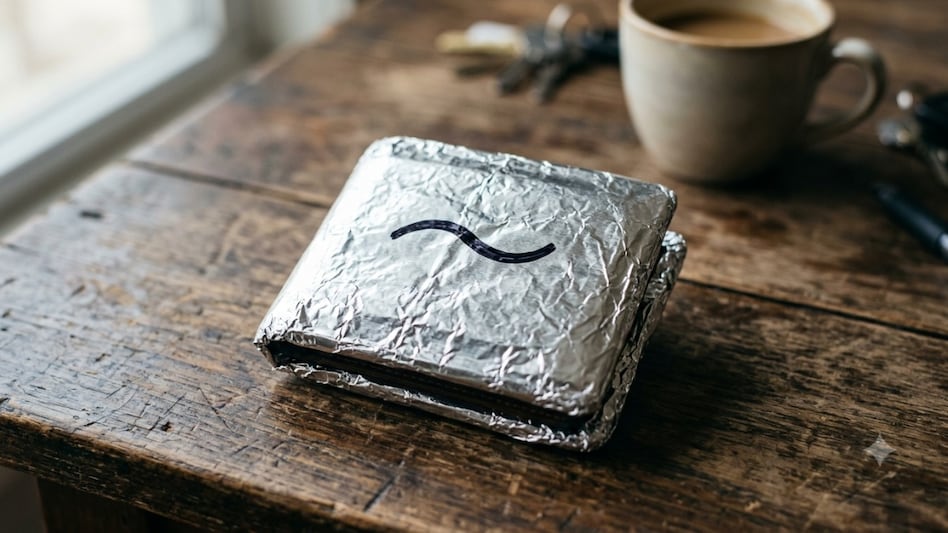
Unlocking the Secrets of Quantum Gravity: Can AI Help Physics Make a Leap?
The realm of scientific research is undergoing a profound transformation, fueled by the rapid advancements in artificial...
Business Today | Jul 25, 2026, 24:30
Elon Musk Faces Major Setbacks as Tesla and SpaceX See Significant Stock Declines
It has been a challenging week for Elon Musk, as both Tesla and SpaceX experienced substantial stock declines. Tesla sha...
CNBC | Jul 24, 2026, 20:40