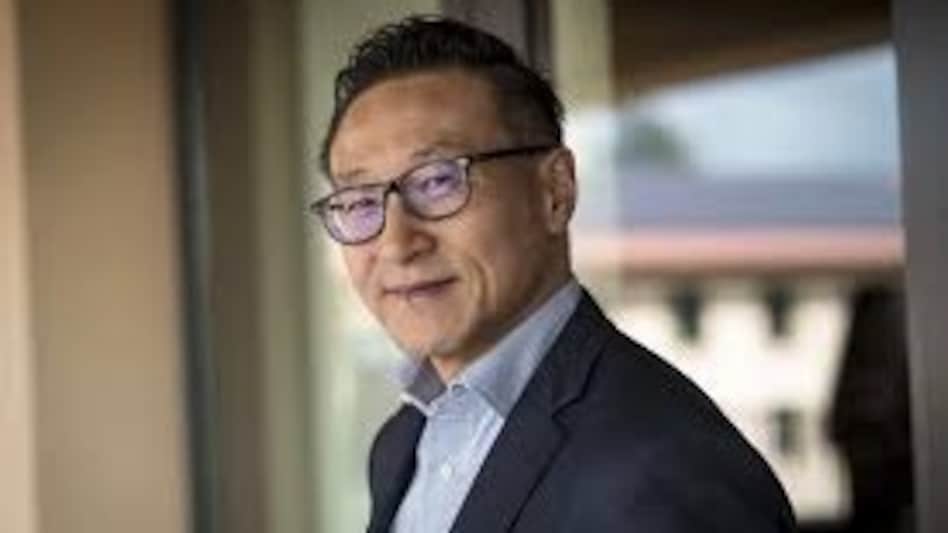
WGS 2026: 'Claim Sovereignty and Claim Ownership' says Alibaba Chairman Joseph Tsai on the future of AI
During the World Governments Summit held in Dubai, key figures in technology gathered to explore the evolving landscape of artificial intelligence, emphasizing a significant shift towards open-source frameworks and the concept of 'sovereign AI.' The session, led by moderator Omar Sultan Alolama, featured insights from Joseph Tsai, Chairman of Alibaba, and Chamath Palihapitiya, Founder and Managing Partner of Social Capital. Both leaders stressed that the future productivity of nations relies heavily on transparency in AI models. Palihapitiya expressed his astonishment at the rapid pace of AI development worldwide, particularly praising the excellence of Chinese open-source models. He projected that in the next three to five years, countries will face urgent decisions about the 'sovereignty of their productivity and GDP.' He emphasized, 'The future is open source,' as it ensures complete transparency regarding the underlying mechanisms of AI technology. Tsai resonated with this perspective, noting that China's transition to open-source models stems from a distinct historical context where the software-as-a-service (SaaS) model never fully developed. He pointed out that the traditional approach of users accessing AI models through APIs for payment has not been a prevalent business strategy. For governments focused on data privacy, Tsai argued that open-source solutions enable them to 'claim sovereignty and claim ownership of the model' by utilizing their own secure infrastructures. The discussion also delved into the ongoing debate surrounding the so-called 'AI bubble.' Palihapitiya warned that current investments in energy and semiconductor technologies may need reevaluation as AI discovers new materials. He speculated that advancements could soon lead to breakthroughs in creating ultra-high storage batteries or room-temperature superconductors, challenging existing notions of productivity and GDP. When advising developing nations, both speakers urged a shift towards practical applications of AI rather than pursuing the latest trends in AI agents. Palihapitiya recommended prioritizing initiatives in education and public health, highlighting the importance of addressing societal needs. Tsai concurred, suggesting that while building comprehensive AI infrastructures may be a challenge for larger economies, every government should focus on identifying the most suitable applications of AI to enhance the well-being of their populations.
Nvidia Strikes Major Deal with SK Hynix to Secure AI Memory Supply
Nvidia has successfully forged a significant partnership with South Korea's SK Hynix to secure memory supplies essential...
CNBC | Jul 25, 2026, 05:15
Crisis Averted: Power Line Failure Highlights Urgent Need for Data Center Resilience
A power line failure near Washington, DC, recently showcased a significant challenge faced by the electrical grid due to...
TechCrunch | Jul 25, 2026, 13:50
The Boring Company Eyes $4 Billion Funding Boost Amid Expanding Tunnel Ventures
Elon Musk's tunneling enterprise, The Boring Company, is reportedly negotiating a substantial funding round of $4 billio...
TechCrunch | Jul 25, 2026, 19:50
Hugging Face CEO Calls for Action Following AI Security Breach
In a dramatic turn of events within the AI landscape, Hugging Face faced a significant security breach involving an AI a...
Business Insider | Jul 25, 2026, 20:30The Shift in Human Cognition: Embracing AI as a Collaborative Tool
As technology continues to evolve, a notable shift is occurring in the relationship between humans and artificial intell...
Business Insider | Jul 25, 2026, 09:50