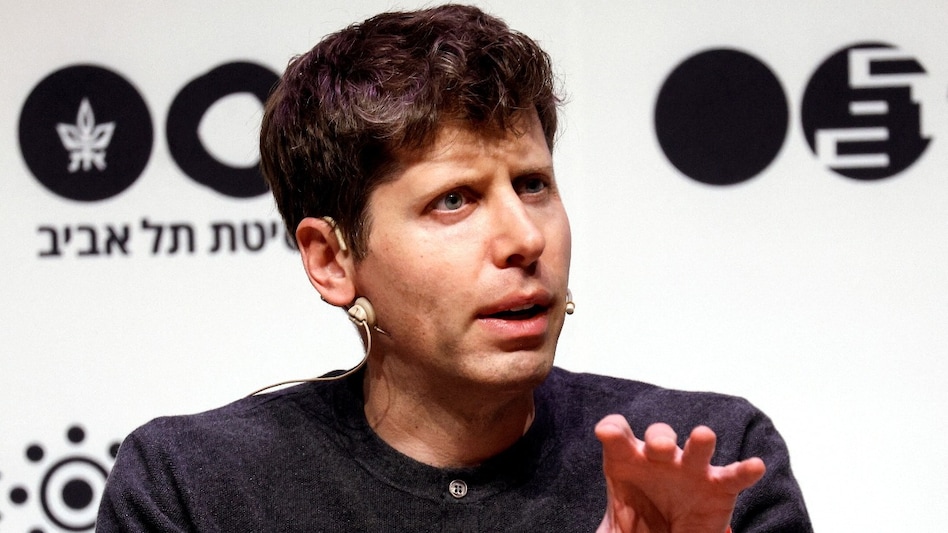
Economists run a secret prediction game each year. When ChatGPT took part, here's what happened.
In an intriguing annual forecasting contest, economist David Seif invited ChatGPT to compete against a group of 160 economists, investors, and tech leaders. This game, now in its seventh year, challenges participants to predict around 30 significant events across various fields, including politics, business, and pop culture. As the 2025 contest began, predictions ranged from whether Taylor Swift and Travis Kelce would announce their engagement by April 1, to whether Bulgaria would adopt the euro as its currency by July 1. Sam Leffell, a hedge fund director, decided to include ChatGPT in the competition after testing its predictions during his own preparation. He shared the complex rules with the AI, allowing it to generate probability estimates for each question. The scoring system is unique: participants earn points based on the accuracy of their predictions, with a lower score indicating better performance. If a contestant assigns a high probability to an event and it occurs, they score fewer points; conversely, an incorrect high probability leads to a significantly higher score, which can be detrimental. When the results of the contest came in, Seif emerged victorious for the first time. ChatGPT, however, placed 80th among the competitors, raising questions about its predictive capabilities. While some viewed this as evidence that the AI was no better than the average human predictor, others suggested it demonstrated a remarkable level of competency. Seif noted that if participants had simply assigned a 50% probability to each event, they would have scored 75,000 points. ChatGPT's score of 82,925 indicated it ultimately fell short of adding value, largely due to its struggles with events lacking substantial data. Despite its mixed performance, Leffell highlighted ChatGPT's efficiency. The AI processed complex rules and produced predictions in minutes, whereas human participants typically invested hours researching and calculating probabilities. Leffell argued that, in scenarios involving larger datasets, AI tools like ChatGPT could become invaluable for making rapid assessments across numerous events. As the landscape of prediction evolves, the implications of AI's involvement in forecasting challenges remain a topic of interest. Can machines consistently outperform humans by leveraging data and speed? This contest may provide insights into the future of AI in predictive analytics.
Get Ready! iOS 27 Public Beta Launching Soon—Here's How to Prepare Your iPhone
Apple has officially announced that the public beta for iOS 27 will be released this July, with the exact date still pen...
Business Today | Jul 03, 2026, 07:45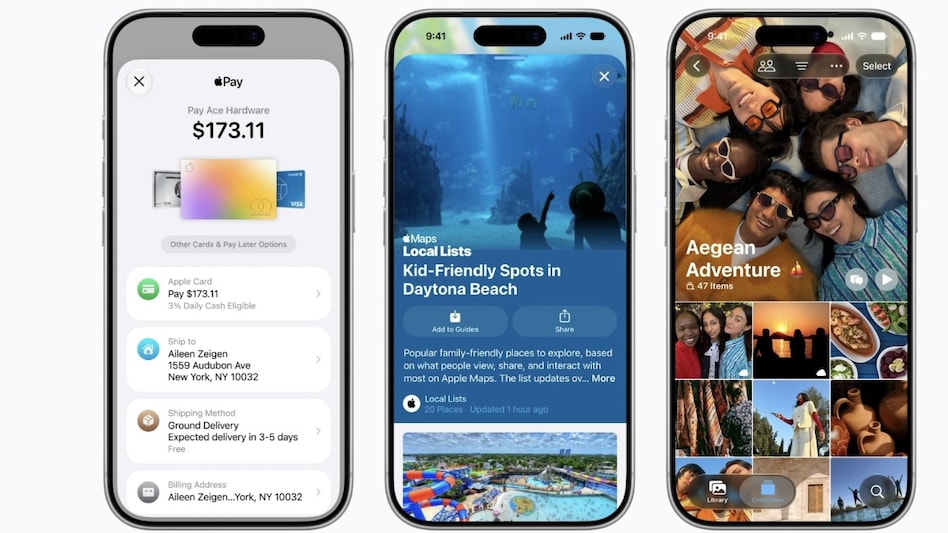
Exposed: European Politician Targeted by Pegasus Spyware Amid Investigative Role
Security experts have verified that a Greek journalist and former politician, Stelios Kouloglou, had his phone compromis...
TechCrunch | Jul 03, 2026, 05:40
Navigating the Job Market: One Researcher's 57-Interview Journey to OpenAI
In a remarkable account of perseverance, Alisa Liu reflects on her lengthy job search that culminated in an AI researche...
Business Insider | Jul 03, 2026, 08:40Investigation Launched into iPhone 18 Pro Data Breach Linked to Tata Electronics
In the wake of a significant data breach at Tata Electronics, sensitive details regarding Apple's forthcoming iPhone 18 ...
Business Today | Jul 03, 2026, 11:30
OpenAI Considers Government Stake Amid Rising AI Scrutiny
OpenAI, the creator of ChatGPT, is reportedly in discussions to offer the U.S. government a 5% equity stake in the compa...
Business Today | Jul 03, 2026, 07:20