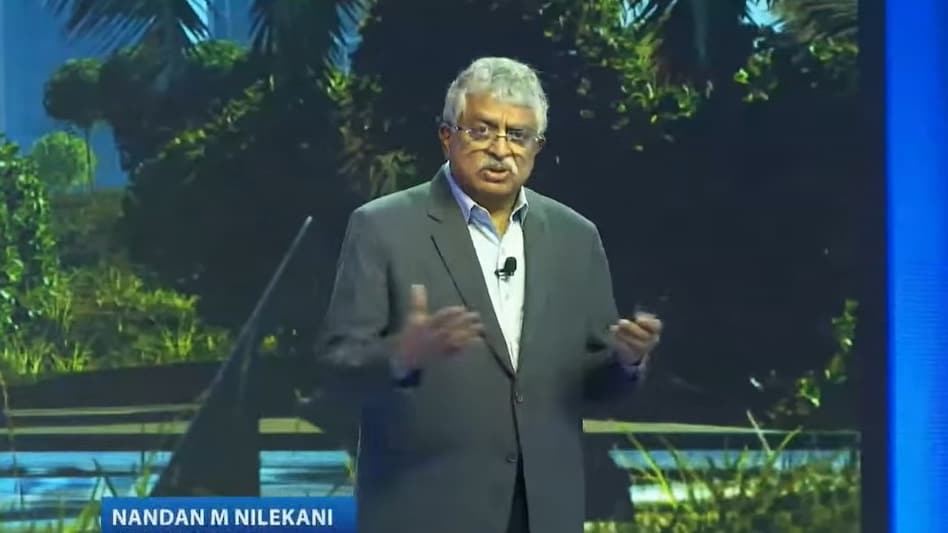
'Writing code will not be the goal': Nandan Nilekani on how AI will transform talent and enterprises
The landscape of work is undergoing a seismic shift due to artificial intelligence (AI), according to Nandan Nilekani, the non-executive chairman of Infosys. Speaking at Infosys AI Day 2026, he emphasized that AI represents a significant structural transformation—one that compels businesses to rethink their operational frameworks and the nature of talent. Nilekani reflected on historical technological shifts, from the printing press to modern computing, noting that while change has always been a part of progress, the current pace of AI adoption is unprecedented. He highlighted the rapid user uptake of AI technologies like chatbots and AI models, which have reached a billion users in just a couple of years, far quicker than the internet or smartphones. This swift acceleration, he argued, is largely due to the foundational infrastructure laid by earlier technologies. Unlike previous advancements, which could integrate into existing systems, AI necessitates a comprehensive overhaul of business practices. Nilekani warned that companies must adapt to this fundamental change, as continuing with traditional methods will no longer suffice. Moreover, he pointed out that the role of talent will evolve significantly in this new AI-driven world. Writing code may no longer be the primary focus; instead, the emphasis will shift towards understanding AI orchestration and making systems work effectively. This shift presents a substantial challenge: navigating the unpredictable outputs of AI while ensuring robustness and reliability in operations. Nilekani also acknowledged concerns about job displacement, especially in coding and IT services roles prevalent in India. However, he suggested that the real transformation lies in the nature of work itself, with new roles emerging, such as AI engineers and deployment specialists. He believes that rather than reducing the workforce, the emphasis will be on reskilling and preparing employees for new challenges. As businesses face the daunting task of integrating AI, Nilekani emphasized the importance of organizational change and the need for continuous investment in technology. The challenge ahead will be ensuring that talent is equipped for the future of work, where hiring, training, and deployment processes will undergo significant transformations. In summary, the AI transition heralds a new era of business operations, one that requires a proactive approach to workforce development, embracing the opportunities that arise in this steadily evolving landscape.
Waymo Considers Parting Ways with Uber Amid Rising Tensions
Waymo is reportedly exploring options to exit its partnership with Uber, which has allowed the Alphabet-owned firm to de...
TechCrunch | Jul 24, 2026, 21:00
Anduril's Valuation Set to Soar: A $100 Billion Funding Round on the Horizon
Anduril, a prominent player in defense technology, is reportedly gearing up for a significant funding round that could e...
TechCrunch | Jul 24, 2026, 17:40
Moody's Warns of Credit Risks as Tech Giants Ramp Up AI Investments
According to a recent report from Moody's Ratings, the surge in investment towards artificial intelligence infrastructur...
CNBC | Jul 24, 2026, 17:50
India's Crackdown on Open-Source Messaging App Raises Legal Concerns
The Indian government's recent initiative to enforce restrictions on Jack Dorsey's offline Bluetooth messaging applicati...
TechCrunch | Jul 24, 2026, 17:10
Vietnam's Controversial Social Media Proposal: A New Approach for Youth Engagement
Vietnam is contemplating a distinctive approach to youth social media regulations, diverging from the more common outrig...
TechCrunch | Jul 24, 2026, 21:25