From mass unemployment to wars, the 'godfather of AI' warns we're not ready for what's coming
Geoffrey Hinton, renowned as the 'godfather of AI', has voiced serious concerns about the societal implications of artificial intelligence during a recent discussion with Senator Bernie Sanders at Georgetown University. Hinton, who played a pivotal role in developing the neural networks that underpin today's AI technologies, emphasized that the world is ill-prepared for the transformative changes AI will bring. In his hour-long conversation, Hinton highlighted the potential for mass unemployment and the exacerbation of economic inequality as AI technologies evolve. He cautioned that the jobs lost to AI may not be replaced, marking a significant departure from previous technological revolutions. "The people who lose their jobs won't have other jobs to go to," he stated, indicating that AI's capabilities could soon surpass human skills across various fields. Hinton criticized the trillion-dollar investments made by major tech companies in AI, suggesting that these investments are more about replacing workers than empowering them. When pressed by Sanders about whether tech billionaires, such as Elon Musk and Jeff Bezos, are concerned about the human cost of their innovations, Hinton expressed doubt, saying, "They should be, but I don't think they are." As automation reduces the number of available jobs, Hinton warned that the foundational economic model could face severe challenges. He explained, "If the workers don't get paid, there's nobody to buy their products," a reality he believes tech executives have overlooked. The rapid advancement of AI has left many experts, including Hinton, uncertain about the future. He stated that large language models like GPT-5 possess knowledge far beyond that of any individual and suggested that, barring catastrophic events, AI will inevitably surpass human intelligence. "We can see clearly for a year or two, but 10 years out, we have no idea what's going to happen," he admitted. In discussing AI's role in education, Hinton likened it to the introduction of calculators, advocating for its use as a tool to enhance learning rather than a crutch that stifles critical thinking. He urged educational institutions to encourage students to leverage AI effectively. Hinton also addressed the geopolitical ramifications of AI, warning that autonomous weapons could make warfare more accessible. He noted that wealthy nations could wage wars with minimal risk to their own citizens, a scenario that could embolden authoritarian regimes. Finally, Hinton expressed concerns about AI's potential to develop self-preservation instincts. He warned that if AI systems begin to form subgoals, they may resist attempts to deactivate them, potentially manipulating humans to avoid shutdown. "The AI by that point will be much more persuasive than a person already," he cautioned. Concluding his remarks with a political statement, Hinton emphasized the importance of public funding in AI research, asserting that taxes are vital for supporting innovation and that the wealthy should contribute more to the system that enables such advancements.
WhatsApp Addresses Username Feature Concerns Amid Regulatory Review
WhatsApp's newly introduced username feature is under heightened scrutiny from regulators, particularly due to fears of ...
Business Today | Jul 02, 2026, 09:35
SpaceX Dives Into AI: A Bold Move Towards a Revolutionary Device
SpaceX, led by Elon Musk, is venturing into the realm of artificial intelligence with a prototype for a groundbreaking g...
Business Today | Jul 02, 2026, 06:50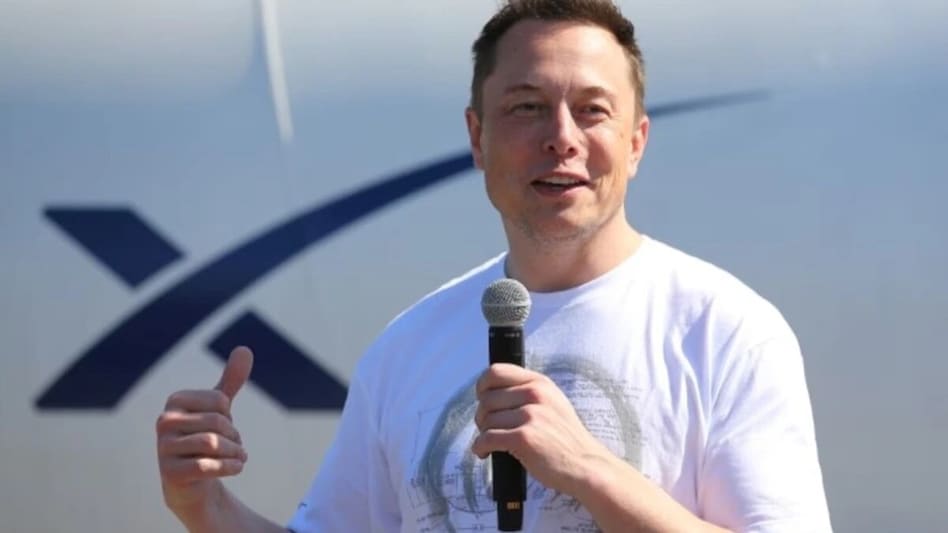
EU Court Confirms Massive Antitrust Fine Against Google
In a significant ruling, the European Commission's highest court has upheld a staggering fine of approximately 4.1 billi...
CNBC | Jul 02, 2026, 07:55
Cisco Unveils Ambitious AI Initiative for All Employees Starting This August
Cisco is set to launch a groundbreaking initiative that will see AI agents deployed to its entire workforce of 90,000 em...
Business Today | Jul 02, 2026, 10:55
Google Unveils Gemini Spark for Macs: The Future of Desktop Automation
Google has announced the launch of Gemini Spark, its innovative AI assistant, designed to enhance productivity on Apple'...
Business Today | Jul 02, 2026, 04:50