How AI is powering the FIFA World Cup 2026
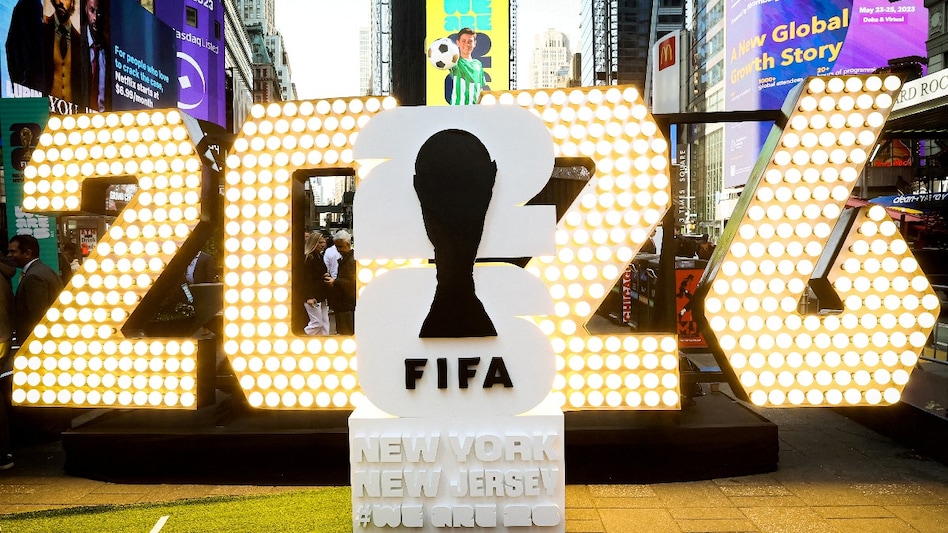
The FIFA World Cup 2026, the largest sporting event on the planet, has officially kicked off in Mexico, with a historic joint hosting by the United States, Canada, and Mexico. Spanning 39 days and featuring 104 matches across 16 cities—11 in the U.S., three in Mexico, and two in Canada—this tournament will welcome over 5 million spectators. Notably, this edition stands out for its extensive integration of artificial intelligence (AI) across various aspects of the tournament. FIFA has partnered with Lenovo to implement cutting-edge AI technologies, enhancing the experience for players, coaches, and fans alike. One of the key innovations is the Football AI Pro, a sophisticated post-match analysis tool designed for match analysts and coaching staff. This platform, developed in collaboration with Lenovo, offers every team access to comparable analytical resources, allowing for real-time analysis of game patterns using video clips and 3D avatars. This data-driven approach enables personalized match insights for players and tactical adjustments by coaches. Another significant advancement is the Intelligent Command Centre, a comprehensive operations platform that provides FIFA with a live overview of the tournament. By aggregating data from various operational systems, officials can monitor everything from venue-level operations to tournament-wide trends, all from FIFA's Miami base. This enhances decision-making capabilities, allowing officials to identify potential issues before they escalate. In a remarkable twist, the tournament will feature the Trionda, a high-tech ball developed by Adidas that requires charging like a smartphone. With a motion sensor embedded within, the Trionda captures every touch, pass, shot, and deflection at 500 times per second, transmitting real-time data to the VAR (video assistant review) room. This technology helps officials make critical decisions with greater accuracy, particularly during contentious moments such as offsides. FIFA has also introduced 3D player avatars, meticulously crafted in collaboration with Lenovo, to accurately represent all 1,248 players in the tournament. These models track player movements seamlessly, enhancing broadcast capabilities and providing visual clarity during offside decisions. To further enhance transparency, referees will be equipped with body cameras utilizing AI stabilization technology. This innovation provides fans with a unique perspective of the game, allowing them to see through the eyes of the referees as they make key decisions. Additionally, AI-powered robot dogs will be deployed for security, equipped with cameras to monitor major tournament venues. At stadium entrances, facial recognition software will enhance safety measures by scanning attendees in real time against security databases. With these technological advancements, the FIFA World Cup 2026 promises to redefine the spectator experience, showcasing how AI can elevate the world of sports to unprecedented heights.
Vision Breakthrough: US Startup Launches Groundbreaking Retina Chip in Europe
Science Corp is poised to introduce a revolutionary retina chip in Europe, designed to restore partial vision for indivi...
Business Today | Jul 25, 2026, 01:00
Unveiling the Future of Finance: TechCrunch Disrupt 2026's Smart Money Stage
The landscape of money is transforming beyond just cash or bank balances, and TechCrunch Disrupt 2026 is set to spotligh...
TechCrunch | Jul 24, 2026, 22:40
Moody's Warns of Credit Risks as Tech Giants Ramp Up AI Investments
According to a recent report from Moody's Ratings, the surge in investment towards artificial intelligence infrastructur...
CNBC | Jul 24, 2026, 17:50
Waymo Considers Parting Ways with Uber Amid Rising Tensions
Waymo is reportedly exploring options to exit its partnership with Uber, which has allowed the Alphabet-owned firm to de...
TechCrunch | Jul 24, 2026, 21:00
Volkswagen Engineers Indicted for Insider Trading Linked to Rivian Partnership
In a significant legal development, the U.S. Department of Justice has brought securities fraud charges against two engi...
TechCrunch | Jul 24, 2026, 20:30