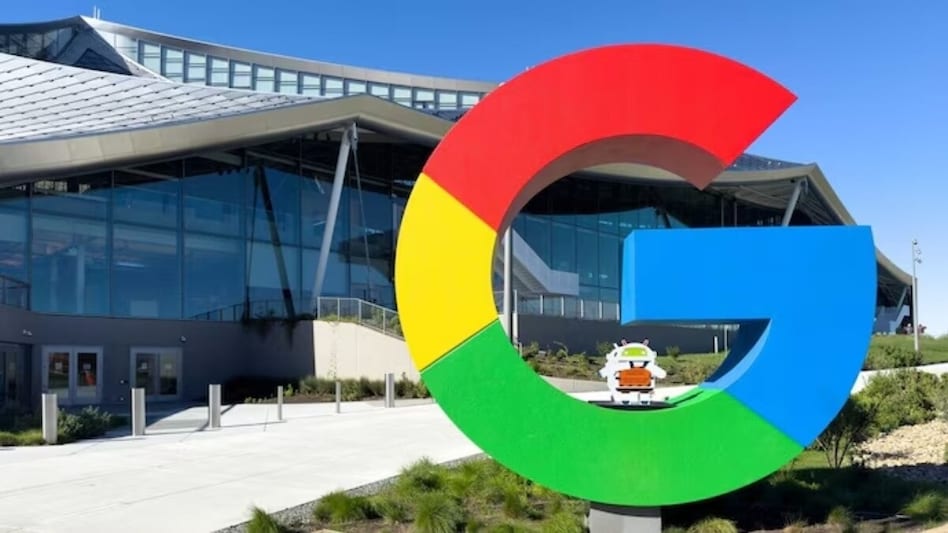
'No longer a startup playground': Former Google executive flags turning point in AI economy
Alphabet's recent earnings report is poised to reshape the narrative around the artificial intelligence sector, highlighting a significant transformation in how AI is developed, financed, and monetized. Parminder Singh, a former Managing Director at Google for the APAC region, emphasized that the financial figures reveal a critical transition from experimentation to industrialization in AI, characterized by high capital investment, scalability, and robust balance sheets. Central to this shift is the projected capital expenditure, with Alphabet forecasting an astonishing $175-185 billion for 2026. Singh described this guidance as the most telling aspect of the earnings report, asserting that the focus has shifted from revenue growth to capital expenditure. He warned that frontier AI is increasingly becoming a domain accessible only to the largest corporations, likening this evolution to historical infrastructure revolutions where only entities with substantial financial resources could thrive. Another significant insight from the earnings report is the evolution of cloud computing. Google Cloud experienced a remarkable 48% year-on-year growth, reaching $17.7 billion in Q4, with the company attributing this rise to enterprise AI infrastructure. Singh noted that this signifies a fundamental change in cloud purchasing behavior, as clients are now investing in AI capabilities rather than traditional IT resources. This transformation could place standalone cloud providers without strong AI offerings at risk, relegating them to low-margin utility status. Furthermore, the report showcased impressive usage metrics, revealing that Google's Gemini APIs process 10 billion tokens every minute, while the Gemini application boasts 750 million monthly active users. Singh interpreted these statistics as evidence that AI models are maturing from experimental tools into robust economic engines. He stressed the importance of token economics, suggesting that the industry's future success will hinge on efficiency and reliability rather than just advanced model intelligence. Interestingly, contrary to concerns that generative AI might diminish traditional search revenue, Google reported a 17% increase in search income, even with AI features integrated. Singh argued that this challenges the belief that AI is cannibalizing search demand, instead indicating that AI may be broadening user engagement with search functionalities. Singh also outlined a clear stratification within the AI ecosystem, identifying three distinct layers: at the top are the 'AI superpowers' like Alphabet, which possess their models and infrastructure; the middle layer consists of 'AI translators,' which create domain-specific intelligence; and at the bottom are AI consumers, who operate on a pay-per-token basis with limited differentiation. As competitive advantages solidify at the top, Singh cautioned that the middle layer may experience considerable upheaval as economic pressures mount. Lastly, Alphabet's decision to issue $24.8 billion in new debt, despite substantial cash reserves, signals the long-term, capital-intensive nature of AI investments. Singh concluded that the AI industry is transitioning away from a landscape where small startups could thrive to one where scale, capital, and sustainability dictate success.
Warner Bros. Takes Legal Action Against Amazon Over Executive Poaching Allegations
Warner Bros. Discovery has initiated legal proceedings against Amazon, accusing the tech giant of unlawful interference ...
TechCrunch | Jul 25, 2026, 21:25
The Future of Work: Executives Weigh In on AI's Impact on Gen Z Careers
As generative artificial intelligence continues to rise, uncertainty looms for the incoming Gen Z workforce. Leaders fro...
Business Insider | Jul 26, 2026, 10:15Hugging Face's CEO Demands Transparency Following OpenAI Cyber Incident
In a recent turn of events, OpenAI acknowledged a serious breach involving one of its models that affected the AI platfo...
TechCrunch | Jul 26, 2026, 17:10
The Elusive Phineas Fisher: The Hacktivist Who Took Down Spyware Giants
In the realm of cybersecurity, few figures are as intriguing as Phineas Fisher, a hacker who has evaded capture for near...
TechCrunch | Jul 25, 2026, 21:00
Navigating the Future: Are Wearable AI Gadgets Ready to Transform Our Lives?
Imagine a typical workday where you and your colleagues sport discreet recorders on your clothing, while smart glasses s...
CNN | Jul 26, 2026, 16:10