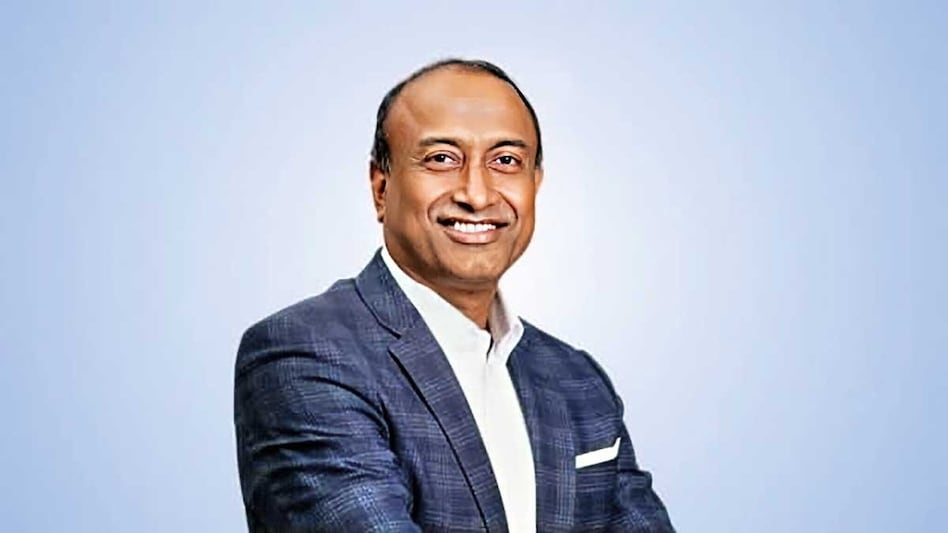
AI is now a foundation of governance and growth, says Nasscom’s Rajesh Nambiar
Artificial intelligence (AI) has transitioned from mere experimentation to becoming a crucial component in governance, economic development, and national capabilities, according to Rajesh Nambiar, President of Nasscom. Speaking at the Nasscom Responsible Intelligence Confluence (RICON) 2026, he emphasized that the swift deployment of AI technology necessitates a focus on responsibility and trust. Nambiar highlighted that AI systems are already operational in real markets and democracies, extending beyond research laboratories and pilot programs. He stated, "We are deploying systems that can learn, decide, persuade, and act on a much larger scale than human judgment can manage." This shift illustrates that AI is now integrated into the fabric of public services, business operations, and citizen engagement. The Nasscom president pointed out that AI's evolution has transformed it into a foundational aspect of governance and economic capability. He stressed the importance of responsibility, asserting, "The question is no longer about scale but how we can implement AI responsibly." Without robust governance, Nambiar warned that AI could amplify not just efficiency, but also potential harm. He noted, "Without accountability, AI can scale inefficiencies that lead to biases, untraceable decisions, and systemic errors. The clarity of accountability diminishes." He also addressed the growing threats posed by AI-driven misinformation and deepfakes, particularly in India. "We've witnessed deepfakes blurring the lines between reality and fabrication," he cautioned, emphasizing the lack of transparency in automated systems that make significant life-altering decisions. The discourse around AI has shifted, according to Nambiar. It is no longer just about technological capabilities but rather about trust, accountability, and readiness for deployment. "Trust has become the currency of adopting these systems. It cannot be assumed; it must be designed into the AI systems," he stated. He rejected the notion that responsible AI hinders innovation, arguing instead that regulation can facilitate better innovation. Nambiar urged that the next phase of AI should transition from theoretical principles to practical execution. "Responsible AI must move from principles to production; we need to see it in action," he concluded, expressing confidence that India has the potential to lead globally in developing responsible and trustworthy AI solutions.
The Aluminum Foil Trend: A DIY Shield Against Wireless Identity Theft
Have you noticed an unusual trend where people are wrapping their wallets in aluminum foil? This peculiar practice has e...
Business Today | Jul 25, 2026, 02:45
SpaceX Successfully Tests Starship Rocket, Launching New Era of Space Exploration
On Friday evening, SpaceX executed a significant milestone by launching its colossal Starship rocket from its facility i...
CNBC | Jul 25, 2026, 24:10
Crisis Averted: Power Line Failure Highlights Urgent Need for Data Center Resilience
A power line failure near Washington, DC, recently showcased a significant challenge faced by the electrical grid due to...
TechCrunch | Jul 25, 2026, 13:50
Vision Breakthrough: US Startup Launches Groundbreaking Retina Chip in Europe
Science Corp is poised to introduce a revolutionary retina chip in Europe, designed to restore partial vision for indivi...
Business Today | Jul 25, 2026, 01:00
SpaceX's Latest Starlink Launch Marks Milestone Amid Booster Setbacks
On Friday, SpaceX marked a significant achievement by successfully launching its first batch of third-generation Starlin...
TechCrunch | Jul 24, 2026, 23:40