This chart should be a 'wake-up call' about AI cheating, Brown University professor says
In an alarming turn of events, Roberto Serrano, a professor at Brown University teaching welfare economics and social choice theory, discovered troubling patterns in his students' exam performances. After administering a take-home midterm exam, which resulted in unusually high scores, Serrano shifted to an in-person format for the final exam. The outcome was striking—grades plummeted. The midterm was conducted remotely following a tragic incident that claimed the lives of two students in December. Serrano expressed his concerns about the ease of cheating facilitated by modern technology, stating, "The problem with this technology is that the cost of cheating has basically gone down to zero. It's very easy for students to succumb to the temptation." When students learned that the final would be in-person, many who previously excelled chose to withdraw. The results were stark; students who previously scored in the high 90s on the midterm found themselves struggling to achieve 50s on the final. A data chart, initially shared by Inside Higher Ed, illustrated this dramatic shift. Brian E. Clark, Brown's Vice President for news and strategic communications, affirmed that Serrano had reported the situation to the university's standing committee on academic integrity, which is now following its established procedures. "Brown treats every allegation of academic integrity with the utmost seriousness," Clark noted. The situation has sparked widespread discussion online, particularly among the tech community. Noteworthy figures, including Y Combinator co-founder Paul Graham and staff from Google DeepMind, have weighed in on the issue. Serrano, while recognizing the significance of the score fluctuations, was taken aback by the magnitude of the response. "I'm a little overwhelmed," he admitted, recounting the hundreds of emails he received from alumni and colleagues alike. Reactions to the incident have varied. Some praised students who maintained high scores, while others pointed out those who performed poorly on the final. Serrano commented on the integrity of the consistently high-performing student, acknowledging their excellence, while expressing admiration for a lower-scoring peer. The debate also extended to the trustworthiness of a generation entering the workforce, with discussions around whether students who utilize AI for cheating can be reliable employees. As educators grapple with the implications of AI-driven cheating, Serrano has vowed to abandon take-home exams and reconsider how homework contributes to grades. He urges fellow professors to critically assess their own policies regarding AI. "It's certainly a wake-up call to the professors," he concluded. "We need to pay attention to this."
AI Revolution: Sam Altman Declares We Are in the Singularity Era
OpenAI's CEO, Sam Altman, has boldly asserted that we have reached a pivotal moment in the evolution of artificial intel...
Business Insider | Jul 26, 2026, 18:10Reclaiming Control: Librarians Host Workshops to Help People Navigate AI Tools
In a lively library setting in South Philadelphia, Charlie Bailey, a local librarian, humorously noted, "Everybody’s on ...
TechCrunch | Jul 25, 2026, 16:20
Unleashing the Power of AI: The 5 Smartphones Redefining Mobile Photography
Artificial Intelligence (AI) is transforming our daily experiences, permeating various aspects of technology, including ...
Business Today | Jul 26, 2026, 07:05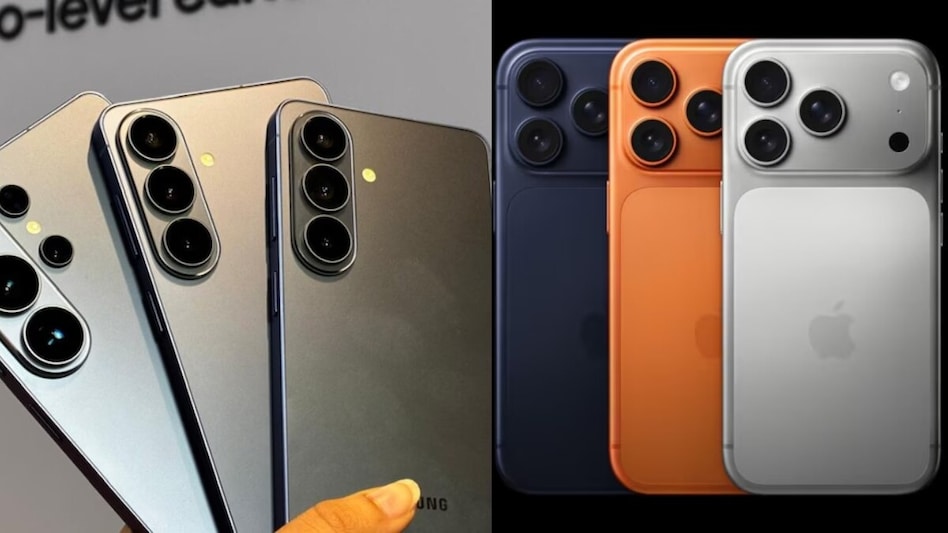
Navigating the Future: Are Wearable AI Gadgets Ready to Transform Our Lives?
Imagine a typical workday where you and your colleagues sport discreet recorders on your clothing, while smart glasses s...
CNN | Jul 26, 2026, 16:10
Kalshi Challenges Netflix Over Controversial Documentary Trailer
Kalshi, the prediction market platform, has taken significant legal steps against Netflix, sending a cease-and-desist le...
TechCrunch | Jul 25, 2026, 17:10