Rocket Report: SpaceX’s next-gen booster fails; Pegasus will fly again
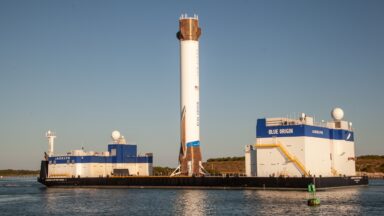
Welcome to the latest edition of the Rocket Report, where we bring you the most exciting updates from the world of space exploration! This week, Blue Origin has once again captured attention with its New Glenn rocket, following a successful launch and landing of the second prototype on November 13. Jeff Bezos' company has unveiled an ambitious plan to enhance the rocket's capabilities by adding more engines. In South Texas, SpaceX is progressing towards the inaugural flight of its next-generation Starship rocket. However, there will be a brief hiatus in our reporting next week due to the Thanksgiving holiday in the United States. We eagerly anticipate resuming our coverage with all the latest developments in early December. In a significant development for space missions, Northrop Grumman's Pegasus rocket has secured a rare contract with Katalyst Space Technologies, a startup that received a $30 million award from NASA. This contract is aimed at creating a robotic rescue mission for the Neil Gehrels Swift Observatory, which has been operational in low-Earth orbit since 2004. The Swift observatory, noted for its ability to study gamma-ray bursts, is in urgent need of a propulsion boost as it faces atmospheric drag that threatens its orbit. Katalyst has chosen Northrop Grumman's Pegasus XL rocket to launch the rescue craft next year. Although the Pegasus XL has not flown since 2021 and has had limited launches in recent years, it is uniquely suited for this mission. The rocket is air-launched from a modified aircraft, allowing it to place payloads of up to 1,000 pounds (450 kilograms) into low-Earth orbit. Despite its high launch price—over $25 million—Katalyst's specific needs override concerns about cost. The mission requires a precise low-inclination orbit, making it incompatible with the more economical rideshare opportunities available on SpaceX's Falcon 9. Additionally, Northrop Grumman has the parts for one more Pegasus XL ready, and they may offer a discount to clear inventory and phase out the costly L-1011 carrier aircraft. Smaller rockets like Rocket Lab's Electron and Firefly's Alpha also lack the necessary performance for this mission, solidifying Pegasus's role in this crucial rescue operation.
OpenAI's Latest Launch Sends Shockwaves Through Software Stocks
In a striking move, OpenAI has significantly impacted the software industry with its recent unveiling of a new enterpris...
Business Insider | Jul 23, 2026, 22:30Ashneer Grover Unveils Innovative Loan Guarantee Platform for Employees
Ashneer Grover, the former MD and co-founder of BharatPe, has made waves with the announcement of his new fintech initia...
Business Today | Jul 24, 2026, 05:55
Elon Musk Reflects on the Unexpected Acceleration of AI Development
Elon Musk has expressed that his initial efforts to curb the concentration of artificial intelligence power may have ina...
Business Insider | Jul 24, 2026, 04:15Flipkart Enters the Food Delivery Arena, Challenging Major Competitors
Walmart's e-commerce powerhouse, Flipkart, is gearing up to launch its own food delivery platform, igniting competition ...
Business Today | Jul 24, 2026, 07:15
Blinkit Rises to Challenge Amazon in E-Commerce Landscape
In an impressive leap forward, Blinkit has significantly increased its operational scale, with the cost to establish a s...
Business Today | Jul 24, 2026, 09:35