Altman and Musk launched OpenAI 10 years ago. Now they’re bitter rivals in a trillion-dollar market
On December 11, 2015, OpenAI emerged as a nonprofit research organization, backed by Elon Musk and a group of influential tech leaders, including Peter Thiel and Reid Hoffman, who collectively invested $1 billion with the vision of advancing artificial intelligence for the greater good. However, that ideal seems to have faded over the last ten years. Musk, now recognized as the richest individual globally, has since departed from OpenAI to establish his own venture, xAI, and is currently embroiled in a contentious legal and public dispute with Sam Altman, the CEO and co-founder of OpenAI. OpenAI has dramatically transformed from its nonprofit roots into one of the fastest-growing commercial entities in the tech world, boasting a staggering $500 billion valuation, largely fueled by the success of its ChatGPT product in the past three years, which now serves over 800 million users weekly. Meanwhile, Musk's xAI is reportedly nearing the completion of a $15 billion funding round, positioning it with a pre-money valuation of $230 billion, as indicated by sources familiar with the developments. As the AI market rapidly evolves, OpenAI and xAI stand alongside industry giants like Google, Anthropic, and Meta, all investing heavily in the development of advanced AI models. The landscape has shifted from simple text-based chatbots to more complex AI-generated content and agentic AI solutions aimed at enhancing enterprise productivity. OpenAI's expenditures have escalated to an astounding $1.4 trillion, primarily driven by the demand for robust data centers and high-performance chips. OpenAI's current trajectory mirrors historical tech firms that invested heavily to challenge established players, drawing parallels to past high-growth tech waves. Gil Luria, an equity analyst at D.A. Davidson, remarked on OpenAI's pivotal role in AI's history, questioning whether its legacy will resemble that of Netscape or Google. The early days of OpenAI featured Nvidia CEO Jensen Huang delivering a $300,000 DGX-1 supercomputer to the organization, a gesture that highlighted the initial skepticism surrounding OpenAI's nonprofit structure. Musk's growing discontent with the direction of OpenAI culminated in his departure from the board in early 2018, citing potential conflicts of interest with Tesla's AI initiatives. In recent years, Musk's critiques of OpenAI have intensified, leading to a lawsuit alleging that the organization strayed from its foundational mission. He has also made attempts to acquire OpenAI for $97.4 billion and has voiced concerns over its affiliation with Microsoft, its primary financial supporter. Notably, former OpenAI team members, including siblings Dario and Daniela Amodei, have also turned into competitors by founding Anthropic, which has recently attracted significant investments from Microsoft and Nvidia, further intensifying the competitive landscape. Altman has expressed confidence in OpenAI's growth strategy, forecasting annual revenue to reach $20 billion by the end of this year, with ambitions of scaling to hundreds of billions by 2030. The company's rapid growth has attracted major tech partnerships, including a $500 billion deal with Oracle for infrastructure services. However, concerns about Oracle's financial health have affected stock performance across AI-related companies. In response to competitive pressures, Altman recently announced a 'code red' within OpenAI, refocusing efforts on enhancing ChatGPT's performance and delaying other project developments. The recent release of ChatGPT-5.2, touted as the most advanced model for everyday professional use, and a new partnership with Disney for a $1 billion content deal underscore OpenAI’s commitment to maintaining its edge in the evolving AI market. Altman remains optimistic about navigating competitive challenges, asserting that the demand for AI solutions remains robust.
Intel Secures Cybersecurity Client Fortinet for Next-Gen Chip Production
Intel has made a significant move in the foundry sector by partnering with Fortinet, a leader in cybersecurity solutions...
CNBC | Jul 21, 2026, 13:20
Resignation Shakes Trump’s AI Oversight as New Leader Steps Down
Chris Fall, who took the helm of the Center for AI Standards and Innovation (CAISI) just three months ago, has officiall...
TechCrunch | Jul 20, 2026, 22:55
Nvidia Takes Bold Step with 9.3% Investment in Nebius, Fueling Stock Surge
Shares of Nebius experienced a significant boost on Tuesday following Nvidia's announcement of a 9.3% investment in the ...
CNBC | Jul 21, 2026, 09:55
Google's Ambitious AI Chip: Frozen V2 Set to Revolutionize Gemini Performance
Alphabet, the parent company of Google, is reportedly in the process of creating a cutting-edge artificial intelligence ...
Business Today | Jul 21, 2026, 05:55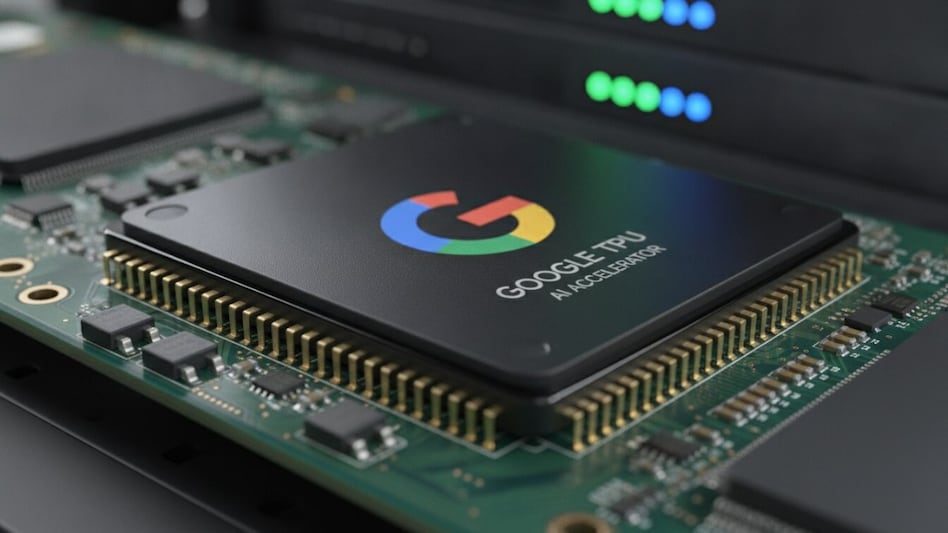
X Launches Ground-Up Redesign of Android App for Enhanced User Experience
In a significant move for its users, X, led by Elon Musk, has unveiled a completely reimagined version of its Android ap...
Business Today | Jul 21, 2026, 05:25