I tested Claude Design and Canva AI. One had to be coached, the other anticipated my every need.
In the ever-evolving landscape of graphic design, two AI tools have emerged as frontrunners: Claude Design and Canva AI. Recently, I put both to the test to see how they stack up against each other in creating a visually appealing slide deck. Canva has long been a staple in the graphic design world, and with the introduction of its AI capabilities, it aims to enhance user experience. On the other hand, Anthropic's Claude Design, which utilizes the new Opus 4.7 AI model, offers a fresh approach to design by allowing users to create polished visuals across various formats, from slides to prototypes. To evaluate their performances, I tasked both tools with redesigning a Photography 101 slide deck I previously created. My experience with Canva AI began with AI 1.0, which presented a landing page that felt familiar yet inviting. I input my requirements for a six-section presentation, specifying a dark minimalist aesthetic with blue accents. Canva's AI promptly generated an outline for the slides, which I found to be an impressive touch. The initial results from Canva AI were mixed. The first design was visually chaotic, while the second showed promise but needed significant adjustments. After providing further instructions to align text boxes and enhance images, the final product was a marked improvement, suitable for my upcoming workshop. Next, I explored Canva AI 2.0, which allowed for real-time adjustments during the design process. Although the design was slightly underwhelming, the ability to interact with the AI provided a more dynamic experience. After several iterations, I achieved a satisfactory presentation, albeit with some minor hiccups in slide redesigns. Turning my attention to Claude Design, I was initially skeptical due to a previous lackluster experience with logo generation. However, I was pleasantly surprised when Claude engaged me with detailed questions about my preferences, from camera types to participant skill levels. This proactive approach led to an impressive deck that not only met but exceeded my expectations. Claude Design stood out for its ability to automatically identify and rectify its own errors, a feature that significantly reduced my need for intervention. While Canva required prompts for adjustments, Claude anticipated my needs, showcasing a level of sophistication that is quite remarkable. The only obstacle I faced with Claude was when attempting to modify an image in a quiz slide, which led to some amusing misinterpretations. Despite this, Claude's overall performance was superior in my view, primarily due to its self-correcting capabilities. Ultimately, while both platforms have their strengths, Claude Design emerged as the clear winner for its intuitive design process and minimal need for guidance. Pricing also plays a role in the choice between these tools; Claude Pro is available at $17 per month, with a higher tier for extensive usage, while Canva offers a free version with limited AI uses and a Pro subscription at $18 per month. In conclusion, the competition between Claude and Canva showcases the remarkable advancements in AI-driven design tools, offering users a choice between two powerful options. For those looking to streamline their design process, the combination of both platforms could prove to be the ultimate solution.
Linux Creator Challenges Developers: Embrace AI or Fork Off!
In a recent discussion surrounding the use of AI in software development, Linus Torvalds, the founder of Linux, voiced h...
Business Insider | Jul 26, 2026, 13:10Finland Unveils World's Largest Sand Battery to Tackle Renewable Energy Challenges
In a groundbreaking move to address the critical issue of renewable energy intermittency, a small town in southern Finla...
CNBC | Jul 25, 2026, 05:35
The Shift in Human Cognition: Embracing AI as a Collaborative Tool
As technology continues to evolve, a notable shift is occurring in the relationship between humans and artificial intell...
Business Insider | Jul 25, 2026, 09:50The Boring Company Eyes $4 Billion Funding Boost Amid Expanding Tunnel Ventures
Elon Musk's tunneling enterprise, The Boring Company, is reportedly negotiating a substantial funding round of $4 billio...
TechCrunch | Jul 25, 2026, 19:50
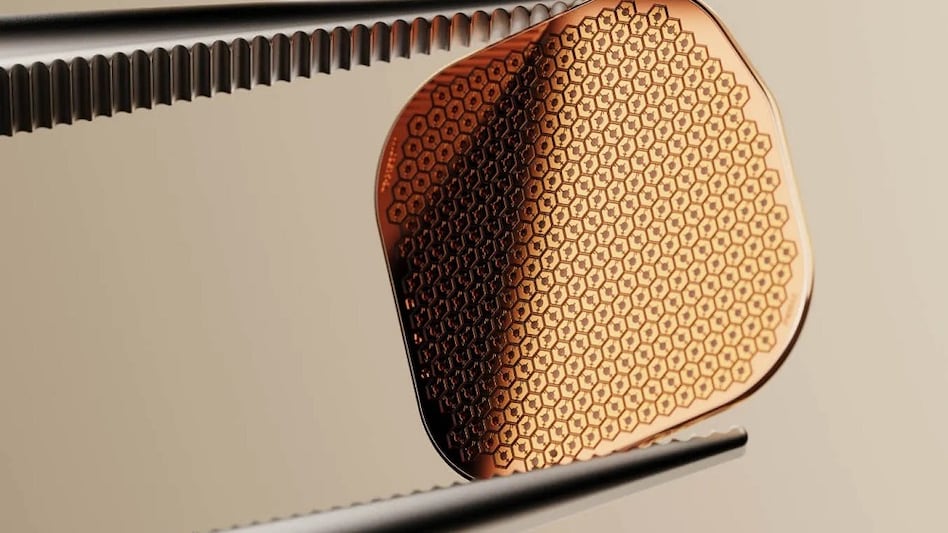
Vision Breakthrough: US Startup Launches Groundbreaking Retina Chip in Europe
Science Corp is poised to introduce a revolutionary retina chip in Europe, designed to restore partial vision for indivi...
Business Today | Jul 25, 2026, 01:00