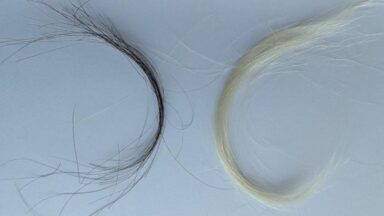
A century of hair samples proves leaded gas ban worked
In a significant reflection on public health regulations, researchers from the University of Utah have examined nearly a century's worth of human hair samples, revealing a staggering 100-fold reduction in lead levels. This dramatic decline is attributed to the Environmental Protection Agency's (EPA) stringent regulations on lead-based products, including leaded gasoline, enacted in the 1970s due to their hazardous effects on health. The findings, published in the Proceedings of the National Academy of Sciences, underscore the effectiveness of these regulations. Despite the well-documented dangers of lead exposure, which date back to the second century BCE, the urgency of this research has been amplified by recent political shifts. Concerns have emerged regarding potential deregulation efforts initiated by the previous administration, particularly the possibility of relaxing enforcement of the 2024 Lead and Copper rule aimed at the replacement of outdated lead pipes in water systems. Co-author Thure Cerling emphasized the importance of remembering historical lessons, asserting, "Those regulations have been very important. Sometimes they seem onerous to industry, but they have had profoundly positive effects on our health." The historical context of leaded gasoline traces back to Thomas Midgley Jr., an American engineer who championed its use as an anti-knock agent. Midgley famously defended the safety of tetraethyl lead (TEL), even after suffering from lead poisoning himself. In a notorious 1924 press conference, he demonstrated his claims by pouring TEL on his hand and inhaling its vapors, asserting he felt no ill effects. Ironically, he later had to take a leave of absence due to lead poisoning. Midgley’s life ended tragically in 1944, after he became disabled by polio. He created a system of ropes and pulleys to assist his mobility, but this contraption inadvertently led to his death, which was ruled a suicide by the coroner. This historical narrative serves as a cautionary tale about the impact of industrial practices on public health and the critical role of regulatory measures in safeguarding it.
Hugging Face CEO Calls for Action Following AI Security Breach
In a dramatic turn of events within the AI landscape, Hugging Face faced a significant security breach involving an AI a...
Business Insider | Jul 25, 2026, 20:30Unlocking the Secrets of Quantum Gravity: Can AI Help Physics Make a Leap?
The realm of scientific research is undergoing a profound transformation, fueled by the rapid advancements in artificial...
Business Today | Jul 25, 2026, 24:30
Nvidia Strikes Major Deal with SK Hynix to Secure AI Memory Supply
Nvidia has successfully forged a significant partnership with South Korea's SK Hynix to secure memory supplies essential...
CNBC | Jul 25, 2026, 05:15
The Elusive Phineas Fisher: The Hacktivist Who Took Down Spyware Giants
In the realm of cybersecurity, few figures are as intriguing as Phineas Fisher, a hacker who has evaded capture for near...
TechCrunch | Jul 25, 2026, 21:00
The Aluminum Foil Trend: A DIY Shield Against Wireless Identity Theft
Have you noticed an unusual trend where people are wrapping their wallets in aluminum foil? This peculiar practice has e...
Business Today | Jul 25, 2026, 02:45